


Introduction
What is a breast augmentation?
Breast augmentation, also known as augmentation mammoplasty, is a surgical procedure designed to enhance the size and shape of the breasts. It involves placing implants under the breast tissue or chest muscles to achieve a fuller appearance.
- Enhances breast size and shape
- Uses implants (saline or silicone)
- Can correct asymmetry
- Improves self-confidence
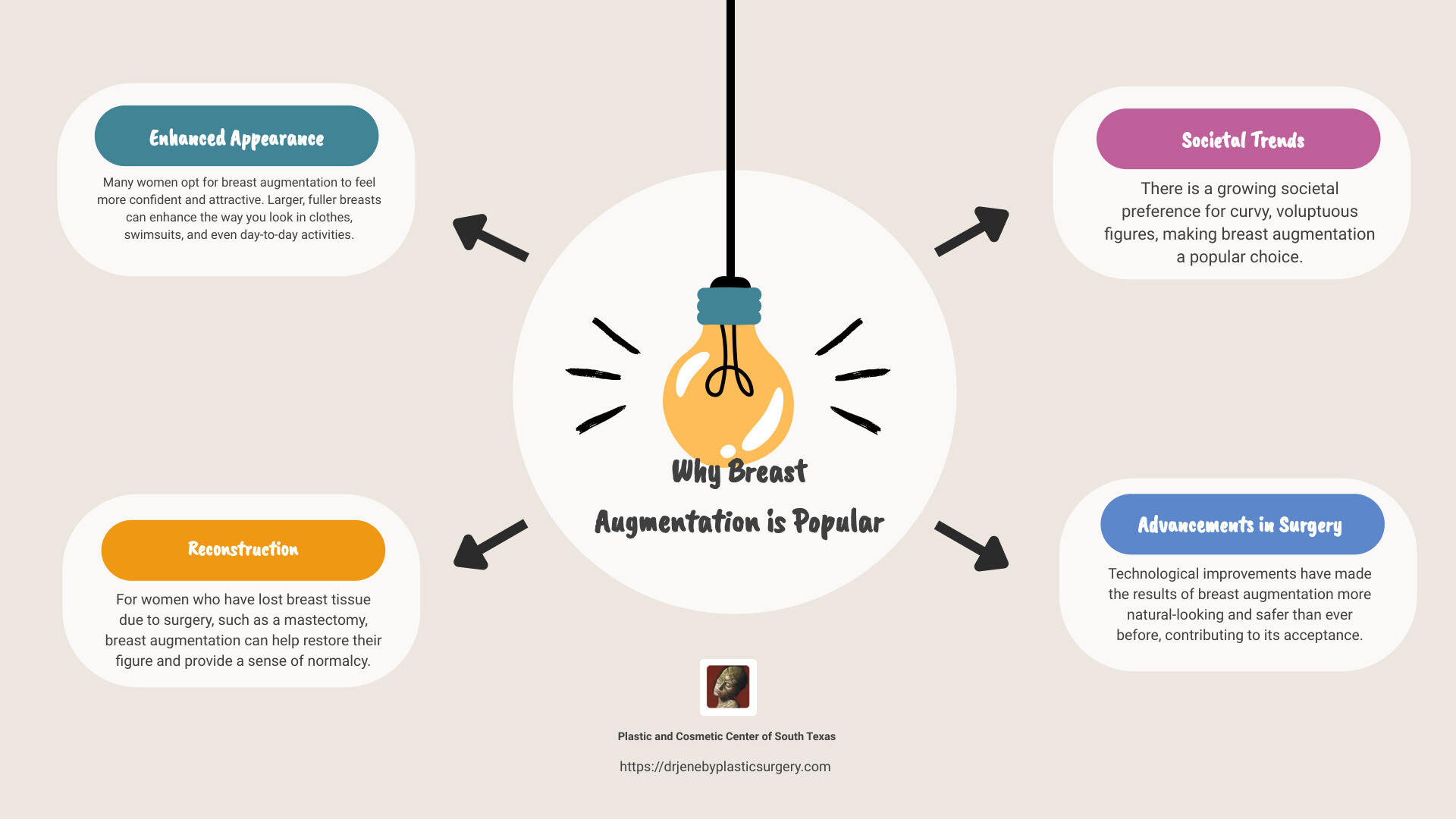
Breast augmentation has gained popularity for several reasons:
Enhanced Appearance: Many women opt for breast augmentation to feel more confident and attractive. Larger, fuller breasts can enhance the way you look in clothes, swimsuits, and even day-to-day activities.
Reconstruction: For women who have lost breast tissue due to surgery, such as a mastectomy, breast augmentation can help restore their figure and provide a sense of normalcy.
Societal Trends: There is a growing societal preference for curvy, voluptuous figures, making breast augmentation a popular choice.
Advancements in Surgery: Technological improvements have made the results of breast augmentation more natural-looking and safer than ever before, contributing to its acceptance.
Understanding Breast Augmentation
Definition
Breast augmentation, also known as augmentation mammoplasty, is a surgical procedure designed to enhance the size, shape, and fullness of the breasts. This is usually achieved by inserting implants under the breast tissue or chest muscles. The goal can be cosmetic, to improve appearance and self-confidence, or reconstructive, to restore the breast after surgery or trauma.
Augmentation vs. Implants
It’s important to understand the difference between breast augmentation and breast implants:
- Breast Augmentation: This refers to the overall surgical procedure aimed at enhancing the breast’s size and shape.
- Breast Implants: These are the prosthetic devices inserted during the augmentation procedure. They come in various types, such as saline, silicone, and gummy bear implants.
Procedure Overview
Consultation: Your journey begins with a consultation with a board-certified plastic surgeon. You’ll discuss your goals, preferences for size and shape, and any concerns you may have. The surgeon will also explain the different types of implants and surgical techniques available.
Anesthesia: On the day of the surgery, you’ll receive anesthesia to ensure your comfort. This could be general anesthesia, which puts you to sleep, or local anesthesia with sedation, which numbs the breast area while keeping you relaxed.
Incision Sites: The surgeon will make incisions in one of several possible locations, such as:
- Inframammary: Under the breast
- Periareolar: Around the nipple
- Transaxillary: In the armpit
The choice of incision depends on the type of implant, your anatomy, and your surgeon’s recommendation.
Implant Placement: The implants can be placed either under the pectoral muscle (submuscular) or directly behind the breast tissue (subglandular). Each method has its pros and cons, which your surgeon will discuss with you.
Recovery Process: Post-surgery, you’ll need to follow specific instructions to ensure a smooth recovery. This includes wearing a support bra, avoiding strenuous activities, and attending follow-up appointments. Most patients can return to normal activities within a few weeks, but full recovery may take a few months.
By understanding what breast augmentation entails, you can make an informed decision that aligns with your goals and expectations. This sets the stage for a successful and satisfying outcome.
Types of Breast Implants
When considering breast augmentation, it’s important to understand the different types of breast implants available. Each type offers unique benefits and considerations. Here’s a breakdown of the main options:
Saline Breast Implants
Saline implants are filled with sterile salt water. They are inserted empty and then filled once in place, allowing for a smaller incision. If a saline implant leaks, the saline is safely absorbed by the body. These implants provide a uniform shape, firmness, and feel. They are FDA-approved for women aged 18 and older.
Silicone Breast Implants
Silicone implants are pre-filled with a silicone gel that mimics the feel of natural breast tissue. If a silicone implant leaks, the gel may stay within the implant shell or escape into the breast pocket, but the implant does not collapse. Regular check-ups using ultrasound or MRI are recommended to ensure the implants are intact. These implants are FDA-approved for women aged 22 and older.
Gummy Bear Breast Implants
Also known as form-stable implants, gummy bear implants maintain their shape even if the implant shell breaks. They contain a thicker silicone gel, making them firmer than traditional silicone implants. These implants are shaped with more projection at the bottom and taper towards the top, which can lead to an unusual appearance if they rotate, requiring corrective surgery. Placement requires a slightly longer incision.

Fat Transfer Breast Augmentation
In fat transfer augmentation, fat is harvested from another part of your body using liposuction and then injected into your breasts. This method is ideal for those seeking a modest increase in breast size and a more natural look. It’s worth noting that the increase is typically one bra cup size or less, as the body can only metabolize a certain amount of fat.

Understanding the types of breast implants helps you make an informed decision tailored to your goals and body type. Each option has its pros and cons, so it’s crucial to discuss these with your surgeon to choose the best fit for you.
The Procedure Explained
Consultation
The journey to breast augmentation starts with a consultation. During this meeting, your surgeon will discuss your goals, expectations, and medical history. It’s important to be honest about what you hope to achieve and any concerns you have. This is also the time to ask questions about the procedure, recovery, and potential risks. Your surgeon will evaluate your breast anatomy, size, and shape to recommend the best approach for you.
Anesthesia Options
Breast augmentation can be performed under local anesthesia (you’re awake but the breast area is numbed) or general anesthesia (you’re asleep). Most often, general anesthesia is used to ensure you are comfortable and pain-free during the surgery. Your surgeon will discuss the best option based on your medical history and the specifics of your procedure.
Incision Sites
There are three common incision sites for breast augmentation:
- Inframammary: Under the breast, in the crease where the breast meets the chest.
- Periareolar: Around the lower half of the areola.
- Axillary: Under the arm.
The choice of incision site depends on factors like the type of implant, your anatomy, and your surgeon’s recommendation. Each site has its advantages and potential drawbacks, so it’s important to discuss these with your surgeon.
Implant Placement
After making the incision, the surgeon will create a pocket for the implant. There are two main implant placement options:
- Subglandular Placement: The implant is placed behind the breast tissue but in front of the chest muscle.
- Submuscular Placement: The implant is placed under the chest muscle.
Submuscular placement tends to look more natural and has a lower risk of certain complications, but the recovery might be longer. Subglandular placement has a shorter recovery time but may not be suitable for everyone. Your surgeon will help determine the best placement for your body and goals.
Recovery Process
Recovery from breast augmentation varies by individual but generally follows these steps:
- Immediately After Surgery: You’ll be monitored in a recovery room until the anesthesia wears off. You’ll need someone to drive you home and stay with you for at least the first night.
- First Few Days: You may experience pain, swelling, and bruising. Pain medication and antibiotics might be prescribed to manage discomfort and prevent infection.
- First Week: Most people take at least three days off work. If your job is physically demanding, you might need a longer break.
- First Month: Avoid heavy lifting and strenuous activities. Follow your surgeon’s instructions for caring for your incisions and wearing any prescribed support garments.
- Long-Term: Full recovery can take several weeks to months. Regular follow-up appointments with your surgeon are essential to monitor your healing and the outcome of the surgery.
Understanding the procedure helps you prepare mentally and physically for what’s to come. It’s crucial to follow your surgeon’s instructions closely to ensure a smooth recovery and optimal results.
Risks and Complications
While breast augmentation can enhance your appearance and boost self-confidence, it’s important to be aware of potential risks and complications. Understanding these can help you make an informed decision.
Capsular Contracture
Capsular contracture is one of the most common complications. It occurs when scar tissue forms tightly around the implant, distorting its shape. This can cause discomfort and may require additional surgery to correct. According to studies, capsular contracture is graded on a scale of 1 to 4, with severe cases often needing surgical intervention.
Implant Leakage
Implant leakage or rupture can happen with both saline and silicone implants. When a saline implant ruptures, it deflates quickly, making the issue obvious. Silicone implants, however, may leak slowly, sometimes going unnoticed. Research indicates that the rupture-deflation rates for saline implants can range from 3-10% over ten years (source). Corrective surgery is often needed to replace the damaged implant.
Infection
Infections can occur after any surgery, including breast augmentation. The incidence rate of breast implant infection ranges from 1 to 2.5%, according to the National Institute of Health. Proper surgical techniques and post-operative care can minimize this risk. If an infection occurs, treatment may involve antibiotics or even removing the implant.
Changes in Sensation
Some women experience changes in nipple or breast sensation after surgery. This can range from increased sensitivity to numbness. While most regain normal sensation over time, a small percentage may experience permanent changes. This is often due to nerve damage during the surgery.
Anaplastic Large Cell Lymphoma (ALCL)
The FDA has identified a possible link between breast implants with textured surfaces and a rare cancer called breast implant-associated anaplastic large cell lymphoma (BIA-ALCL). Although the risk is very low, it’s important to be aware. The FDA continues to monitor and research this condition.
Breast Implant Illness
Some women report systemic symptoms they attribute to their breast implants, known as breast implant illness. Symptoms can include fatigue, memory loss, and joint pain. The exact cause is not well-understood, but removing the implants has been shown to reverse these symptoms in some cases. Ongoing research aims to better understand this condition.
Understanding these risks and complications is crucial for making an informed decision about breast augmentation. Always discuss these potential issues with your surgeon to ensure you have a clear picture of what to expect.
Frequently Asked Questions about Breast Augmentation
What’s the difference between breast lift and augmentation?
A breast lift and breast augmentation are two different procedures with distinct goals.
Breast Lift (Mastopexy): This surgery lifts and reshapes sagging breasts. It doesn’t change the size of your breasts but repositions them to a higher, more youthful position.
Breast Augmentation: This procedure increases the size of your breasts using implants or fat transfer. It doesn’t lift sagging breasts, but it does make them fuller.
Some women choose to combine both procedures for larger and perkier breasts.
Is breast augmentation painful?
Pain levels vary, but here’s what you can generally expect:
- Initial Recovery: The first week is usually the most uncomfortable. Pain medication can help manage this.
- Under the Muscle: This method tends to be more painful due to muscle stretching.
- Above the Muscle: This is generally less painful since it involves less tissue manipulation.
Most women report discomfort rather than severe pain. Full recovery typically takes six to eight weeks.
What’s the difference between breast reduction and augmentation?
Breast Reduction: This surgery removes excess breast tissue to reduce the size and weight of large breasts. It’s often done to alleviate back pain, neck pain, and other physical discomforts.
Breast Augmentation: This procedure increases breast size using implants or fat transfer, aiming for a fuller and more proportionate look.
Both surgeries can improve self-esteem and body image but serve different purposes based on your needs.
For more detailed information, always consult with a board-certified plastic surgeon to discuss your specific goals and medical history.
Conclusion
Breast augmentation can be a life-changing decision, boosting self-confidence and body image. Many women report feeling more feminine and comfortable in their skin after the procedure. According to surveys, about 70-80% of patients are satisfied with their results and feel their outcomes are perfect.
However, it’s crucial to maintain realistic expectations. While breast augmentation can enhance your appearance, it won’t solve all personal issues or drastically change your life. Discuss your goals thoroughly with your plastic surgeon to ensure you understand what the surgery can and cannot do.
Choosing a board-certified surgeon is essential for a safe and satisfying experience. Board-certified surgeons have undergone rigorous training and testing, ensuring they meet high standards of practice. This reduces the risk of complications and increases the likelihood of achieving your desired results.
At the Plastic and Cosmetic Center of South Texas, we prioritize your safety and satisfaction. Our experienced surgeons are committed to guiding you through every step of your breast augmentation journey, from initial consultation to post-operative care. We believe in the transformative power of cosmetic surgery to enhance not just your appearance, but also your self-confidence and quality of life.
If you’re considering breast augmentation, contact us today to schedule a consultation. Let’s work together to achieve the look you desire with the utmost care and expertise.


