


Why Consider a Tummy Tuck?
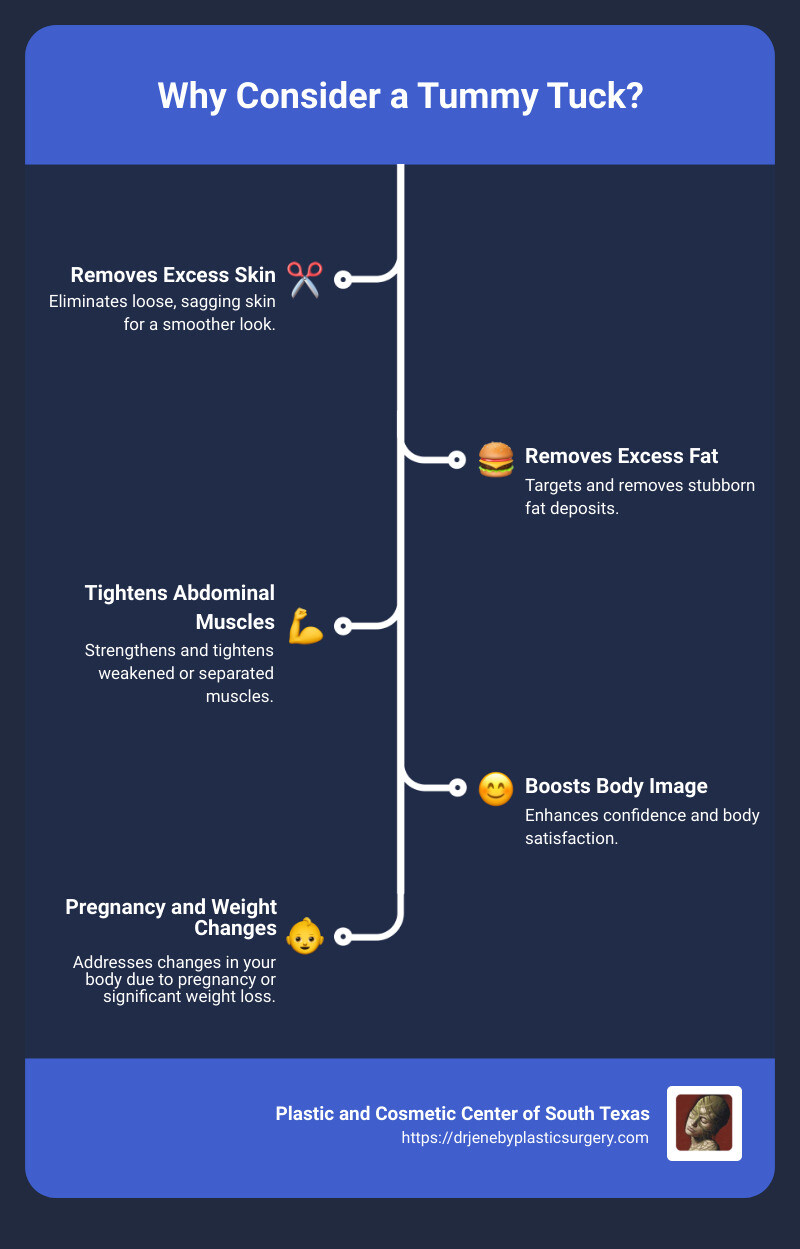
Thinking about a tummy tuck? This cosmetic surgery, also known as an abdominoplasty, is designed to improve the shape and appearance of your abdomen by removing excess skin and fat.
Here’s a quick overview if you’re looking for fast facts:
- Removes excess skin and fat
- Tightens abdominal muscles
- Boosts body image and confidence
At the Plastic and Cosmetic Center of South Texas, we specialize in procedures like tummy tucks to help you feel and look your best.
I’m Dr. Thomas Jeneby. With over 19 years of practice and more than 9,000 procedures under my belt, I am committed to ensuring safe and satisfying results for all my patients looking for a tummy tuck. Let’s dive deeper into what you can expect from this popular procedure.
What is a Tummy Tuck?
A Tummy Tuck, or abdominoplasty, is a surgical procedure that removes excess skin and fat from the abdomen. It also tightens the muscles in the abdominal wall to create a smoother and firmer look. This procedure is often chosen by individuals who have experienced significant weight loss, pregnancy, or aging, which can lead to loose, sagging skin and weakened muscles.

Types of Tummy Tucks
There are several types of tummy tucks, each custom to different needs and goals. Let’s break them down:
Full Abdominoplasty
A full abdominoplasty is the most comprehensive type of tummy tuck. It involves:
- Large incision: Typically made from hip to hip, just above the pubic area.
- Excess skin and fat removal: From the entire abdominal area.
- Muscle tightening: The surgeon tightens the abdominal muscles for a firmer appearance.
- Bellybutton repositioning: The bellybutton is moved to a natural position.
This method is ideal for those with significant excess skin and muscle separation.
Partial Abdominoplasty
A partial abdominoplasty, or mini tummy tuck, targets the lower abdomen:
- Smaller incision: Usually below the bellybutton.
- Excess skin and fat removal: Limited to the area below the bellybutton.
- Muscle tightening: May be included but is less extensive than with a full tummy tuck.
This option is best for individuals with a smaller amount of excess skin and fat.
Mini Tummy Tuck
Similar to a partial abdominoplasty, a mini tummy tuck focuses on minor improvements:
- Minimal skin removal: Only the lower abdomen.
- Limited muscle repair: If needed.
A mini tummy tuck results in a smaller scar and is suitable for those with a small amount of excess skin and good skin elasticity.
Panniculectomy
A panniculectomy is different from a tummy tuck but can be combined with one:
- Excess skin removal: Only the hanging skin below the bellybutton.
- No muscle tightening: Focuses solely on skin removal.
- No bellybutton repositioning: The bellybutton remains in its original position.
This procedure is often covered by insurance if the excess skin causes medical issues like rashes or infections.
In the next section, we’ll explore why you might consider a tummy tuck and who the ideal candidates are for this transformative procedure.
Why Consider a Tummy Tuck?
A tummy tuck can be a life-changing procedure for many people. It helps remove excess fat and skin, and tightens the muscles in your abdominal area. This can create a firmer and smoother tummy. Let’s dive into why you might consider this surgery and who the best candidates are.
Ideal Candidates
Good Health: The best candidates for a tummy tuck are those in good overall health. This means no serious conditions like heart disease or diabetes.
Post-Pregnancy: Women who have had multiple pregnancies often find their abdominal muscles and skin stretched beyond the point where they can return to normal through diet and exercise alone. A tummy tuck can help tighten those muscles and remove excess skin.
Post-Weight Loss: If you’ve lost a lot of weight, you might have loose skin hanging around your belly. A tummy tuck can remove this excess skin and give you a more toned appearance.
Abdominal Muscle Tightening: People with weakened or separated abdominal muscles can benefit from the muscle-tightening aspect of a tummy tuck.
Who Should Avoid a Tummy Tuck?
Future Pregnancy: If you plan on having more children, you should wait. Pregnancy can re-stretch the muscles and skin tightened during the procedure, undoing the results.
Significant Weight Loss Plans: If you plan to lose a lot of weight, a tummy tuck might not be the best option right now. Significant weight changes can affect your results.
Severe Chronic Conditions: People with severe health issues like heart disease, lung disease, or diabetes are at higher risk for complications.
Smoking: Smoking slows healing and increases the risk of complications. You’ll need to quit smoking at least two weeks before and after the surgery.
In the next section, we’ll walk you through the tummy tuck procedure itself, from preparation to recovery.
The Tummy Tuck Procedure
Pre-Procedure Preparation
Before undergoing a tummy tuck, there are several important steps to ensure you’re ready for the procedure:
Medical History Review: Your doctor will go over your medical history, including any medications you’re taking and any allergies you might have. This helps to avoid complications.
Physical Exam: The doctor will examine your abdomen and might take photos for your medical record. This helps in planning the surgery and assessing the results.
Expectations Discussion: Be clear about why you want a tummy tuck and what you hope to achieve. Understanding the benefits and risks, including scarring, is crucial.
Smoking Cessation: If you smoke, you’ll need to quit at least two weeks before surgery and during recovery. Smoking decreases blood flow and slows healing.
Medication Adjustments: You may need to stop taking certain medications like aspirin, anti-inflammatory drugs, and some herbal supplements that can increase bleeding.
During the Procedure
The tummy tuck procedure involves several key steps:
Anesthesia: You’ll be under general anesthesia, making you completely unconscious and unable to feel pain. Sometimes, a pain-relieving medication and moderate sedation are used instead.
Incision Details: Your surgeon will make a horizontal oval or elliptical incision between your bellybutton and pubic hair. The shape and length depend on the amount of skin to be removed.
Skin and Fat Removal: The surgeon removes excess skin and fat from the area. In some cases, liposuction is also performed to improve the results.
Muscle Tightening: The connective tissue (fascia) over the abdominal muscles is tightened with permanent sutures.
Bellybutton Repositioning: The skin around the bellybutton is repositioned, and the bellybutton is brought out through a small incision and sutured in its normal position.
Duration: The entire procedure typically takes about two to three hours.
Post-Procedure Care
After the tummy tuck, proper care is essential for a smooth recovery:
Surgical Dressing: Your abdominal incision and bellybutton will likely be covered with surgical dressing.
Drainage Tubes: Small tubes may be placed along the incision site to drain excess blood or fluid. Your healthcare team will show you how to care for these drains.
Pain Management: You’ll be given pain medication to manage discomfort. Swelling in the surgical area is normal.
Antibiotics: You might need to take antibiotics to prevent infection, especially if drainage tubes are in place.
Blood-Thinning Medication: Your surgeon might prescribe a blood-thinning medication to prevent blood clots.
Abdominal Binder: Wearing an abdominal binder helps support your abdomen and reduce swelling.
Activity: Members of your healthcare team will help you walk as soon as the first day after surgery to prevent blood clots.
By following these steps, you can ensure a safer and more comfortable experience during and after your tummy tuck procedure.
In the next section, we’ll discuss the risks and complications associated with a tummy tuck.
Risks and Complications
Like any surgery, a tummy tuck comes with its own set of risks and potential complications. It’s essential to understand these before deciding to proceed.
Fluid Accumulation
Fluid accumulation, or seroma, is common after a tummy tuck. This happens when fluid collects beneath the skin. Doctors often place drainage tubes after surgery to help prevent this. In some cases, your doctor might need to remove fluid using a needle and syringe.
Poor Wound Healing
Poor wound healing can occur along the incision line. This might cause the wound to reopen or heal slowly. Antibiotics may be given to prevent infection, but sometimes additional surgery is needed to correct the issue.
Scarring
A tummy tuck will leave scars. The incision is usually made along the bikini line, making it easy to hide under clothing. However, the length and visibility of the scar can vary. Your surgeon might recommend creams or ointments to help reduce the appearance of scars after you’ve healed.
Tissue Damage
Tissue damage can happen during the surgery. This is more likely if you smoke, as smoking reduces blood flow to the skin. In some cases, fatty tissue deep within the skin might get damaged or die, requiring additional surgery to fix.
Changes in Skin Sensation
You might experience changes in skin sensation after your tummy tuck. This happens because the repositioning of tissues can affect the nerves in the abdominal area. Reduced sensation or numbness is common and usually diminishes over time.
Infection
Infection is a risk with any surgery. Signs of infection include redness, swelling, and fever. Your doctor will give you antibiotics to help prevent this, but you should contact your healthcare provider if you notice any signs of infection.
Bleeding
Bleeding during and after surgery is another risk. This can sometimes lead to the need for additional surgery. Your healthcare team will monitor you closely to manage any bleeding that occurs.
Understanding these risks is crucial for making an informed decision about your tummy tuck. Always discuss any concerns with your surgeon to ensure you have all the information you need.
In the next section, we’ll guide you through the recovery process and what to expect as you heal.
Recovery Process
Long-Term Results
Recovering from a tummy tuck involves several stages, each crucial for achieving the best long-term results. Here’s what you need to know:
Pain and Swelling
Right after surgery, it’s normal to experience pain and swelling. The first week is typically the most uncomfortable. Your surgeon will prescribe pain medication to help manage this discomfort. Swelling and bruising will gradually subside over the following weeks, allowing you to see the initial results of your tummy tuck.
Activity Restrictions
For at least six weeks, you’ll need to limit strenuous activities. This includes heavy lifting, intense exercise, and any movements that strain your abdominal area. You might need to take up to one month off work to ensure proper recovery. Your surgeon will provide specific guidelines custom to your situation.
Follow-Up Visits
Regular follow-up visits with your surgeon are essential. These appointments allow your doctor to monitor your healing process and address any complications early. Ask your surgeon how often you need to be seen and make sure to attend all scheduled visits.
Scar Care
A tummy tuck will leave scars, typically along the bikini line. While these scars may fade slightly over time, they won’t completely disappear. Your surgeon may recommend creams or ointments to help minimize the appearance of scars once you’re fully healed. Proper scar care is crucial for achieving the best aesthetic results.
Return to Daily Life
Most people are thrilled with their appearance after a tummy tuck, but it can take months to feel like your normal self. Gradually reintroduce activities as your body heals. Follow your surgeon’s advice on how to best position yourself while sitting or lying down to ease pain and prevent strain on your incision.
Maintaining Stable Weight
To ensure the long-lasting results of your tummy tuck, maintaining a stable weight is crucial. Significant weight gain or loss can alter your appearance and affect the outcome of the surgery.
Diet and Exercise
A healthy diet and regular exercise are key to keeping your new look. Focus on balanced nutrition, including proteins, fruits, vegetables, and whole grains. Staying active will help you maintain your toned and slimmer abdomen.
Permanent Results
The results of a tummy tuck are generally permanent, provided you maintain a stable weight and follow a healthy lifestyle. By removing excess skin and fat and tightening the abdominal muscles, a tummy tuck can give you a more toned and contoured appearance that lasts for years.
In the next section, we’ll address some frequently asked questions about tummy tucks to help you further understand this procedure.
Frequently Asked Questions about Tummy Tuck
How long can a tummy tuck last?
The results of a tummy tuck are generally permanent, but they depend on maintaining a stable weight and a healthy lifestyle. Significant weight gain or loss can alter the appearance of your abdomen. To make the results last, focus on:
- Healthy diet: Eat plenty of fruits, vegetables, lean proteins, and whole grains.
- Regular exercise: Stay active to keep your muscles toned and maintain your weight.
What are the negatives of a tummy tuck?
Like all surgeries, a tummy tuck comes with some risks and potential complications:
- Fluid accumulation: Also known as seroma, this can occur under the skin and might require draining.
- Poor wound healing: Some areas might heal slower than others.
- Scarring: The procedure leaves a scar from hip to hip along the lower abdomen, usually hidden by clothing.
- Tissue damage: There’s a risk of damage to the underlying tissues.
- Changes in skin sensation: Some people experience numbness or reduced sensation around the incision area.
- Infection and bleeding: These are common risks with any surgery.
How much weight will a tummy tuck take off?
A tummy tuck is not a weight-loss procedure, but it can remove some weight by eliminating excess skin and fat. The amount varies based on the type of abdominoplasty:
- Full abdominoplasty: Removes a significant amount of skin and fat while tightening muscles.
- Mini tummy tuck: Targets a smaller area below the belly button, removing less skin and fat.
- Panniculectomy: Focuses only on removing excess skin hanging below the belly button.
The primary goal is to create a smoother and firmer abdominal profile, not to achieve significant weight loss.
Conclusion
At the Plastic and Cosmetic Center of South Texas, we understand that deciding to undergo a Tummy Tuck is a significant step. Our experienced surgeons use advanced techniques to ensure you achieve the best possible results.
Patient safety is our top priority. We take every precaution to minimize risks and ensure a smooth recovery. Our surgeons are highly skilled and compassionate, making sure you feel comfortable and informed throughout your journey.
Patient satisfaction is at the heart of what we do. From your initial consultation to your post-surgery follow-ups, we are committed to providing exceptional care and support. Most of our patients are thrilled with their results, enjoying a smoother and more toned abdominal profile.
We also offer in-house financing options to make your cosmetic goals more accessible. Our financing plans are designed to fit your budget, so you don’t have to worry about financial strain. We believe that investing in your appearance is an investment in your confidence and well-being.
For more information about our services or to explore our financing options, please contact us. Let us help you take the first step towards a new, more confident you.
Investing in a Tummy Tuck can have a lasting positive impact on your life. At the Plastic and Cosmetic Center of South Texas, we’re not just about changing appearances; we’re about enriching lives.


