


Introduction
Breast augmentation is a popular cosmetic surgery designed to enhance the size and shape of your breasts. This procedure can involve the use of breast implants or fat transfer to create the desired look. At the Plastic and Cosmetic Center of South Texas, we specialize in personalized breast augmentation options to help you achieve your goals safely and effectively.
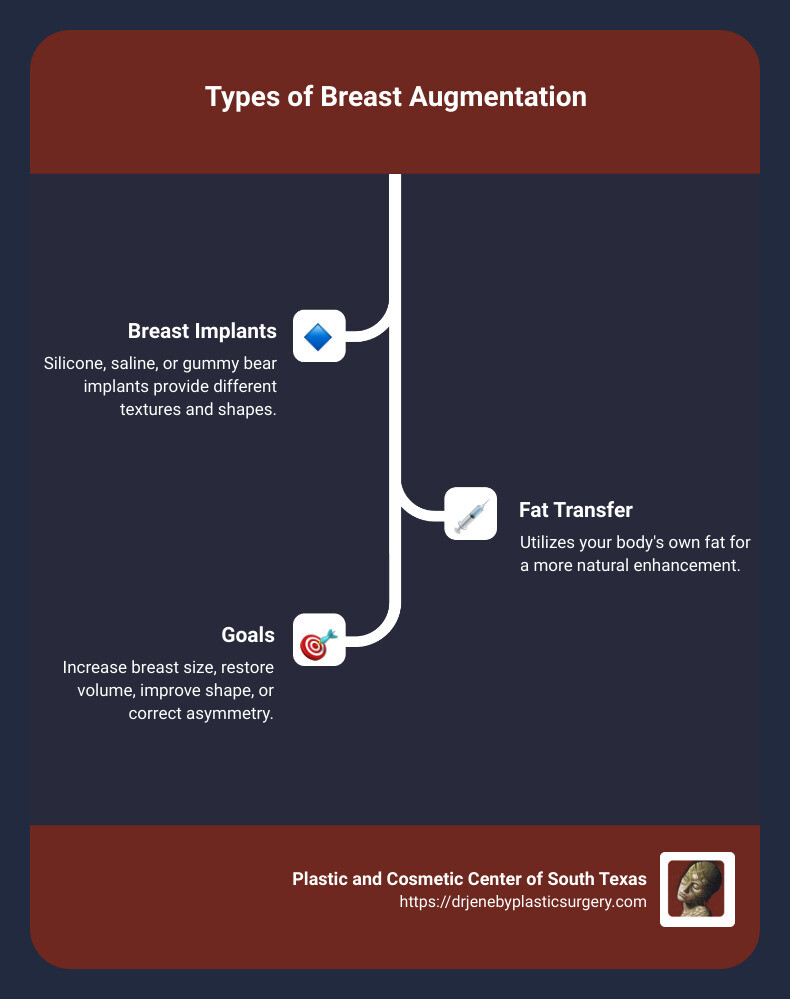
If you’re considering breast augmentation, here’s the quick scoop:
- Breast Implants: Silicone, saline, or gummy bear implants provide different textures and shapes.
- Fat Transfer: Utilizes your body’s own fat for a more natural enhancement.
- Goals: Increase breast size, restore volume, improve shape, or correct asymmetry.
What is Breast Augmentation?
Breast augmentation, also known as augmentation mammoplasty, is a cosmetic surgery designed to enhance the size, shape, and overall appearance of your breasts. The procedure can be tailored to meet various goals, such as increasing breast size, restoring volume lost after pregnancy or weight loss, improving breast shape, and correcting asymmetry.
Types of Breast Augmentation
There are two main methods for breast augmentation: breast implants and fat transfer. Each method has its own benefits and is suitable for different needs and preferences.
Breast Implants
Breast implants are the most common method of breast augmentation. They come in several types, each offering unique advantages:
Silicone Implants: These are filled with silicone gel, which feels more like natural breast tissue. They are FDA-approved for women aged 22 and older. Silicone implants can provide a natural look and feel, but regular check-ups are recommended to ensure they are functioning properly.
Saline Implants: Filled with sterile salt water, saline implants are FDA-approved for women aged 18 and older. If a saline implant leaks, the body absorbs the saline naturally, and the implant collapses. They offer a uniform shape and firmness.
Gummy Bear Implants: Also known as form-stable implants, these maintain their shape even if the shell breaks. The silicone gel inside is thicker than traditional silicone implants, making them firmer. These implants are shaped, providing more projection at the bottom and tapering towards the top. However, they require a slightly longer incision.
Structured Saline Implants: These contain an inner structure to make them feel more natural while still being filled with saline. They offer a more natural feel compared to traditional saline implants.
Fat Transfer
Fat transfer breast augmentation is a more natural option for enhancing breast size. This procedure involves using liposuction to remove fat from other parts of your body, such as the hips, thighs, or abdomen. The fat is then purified and injected into the breasts. This method is ideal for those seeking a modest increase in breast size and a more natural look and feel.
Goals of Breast Augmentation
Breast augmentation can help you achieve several aesthetic goals:
- Increase Breast Size: Enhance your breast size for a fuller appearance.
- Restore Volume: Regain breast volume lost due to pregnancy, weight loss, or aging.
- Improve Shape: Achieve a more balanced and aesthetically pleasing breast shape.
- Correct Asymmetry: Address uneven breasts to create a more symmetrical look.
At the Plastic and Cosmetic Center of South Texas, we offer personalized breast augmentation options to help you achieve your desired look safely and effectively. Whether you choose breast implants or fat transfer, our board-certified surgeons will guide you through the process to ensure the best possible outcome.
Benefits of Breast Augmentation
Breast augmentation offers a range of benefits that can significantly improve your quality of life. Here are some key advantages:
Enhance Self-Image
Breast augmentation can help you feel more comfortable and confident in your own skin. Many women report a boost in self-esteem and satisfaction with their body after the procedure.
Case Study: According to the study Effect of Breast Augmentation Mammoplasty on Self-Esteem and Sexuality: A Quantitative Analysis (2007), women experienced a notable increase in self-esteem, averaging 20.7 to 24.9 points on the Rosenberg self-esteem scale post-surgery.
Improve Confidence
Feeling good about your appearance can have a profound impact on your overall confidence. Whether it’s wearing your favorite outfits or feeling more attractive in social settings, breast augmentation can help you project a more confident you.
Quote: “Breast augmentation has given me the confidence to wear clothes I never thought I could pull off. It’s been a life-changing experience,” says a satisfied patient from the Plastic and Cosmetic Center of South Texas.
Restore Fullness
Pregnancy, breastfeeding, and weight loss can all lead to a loss of breast volume. Breast augmentation can restore that fullness, helping you regain your pre-pregnancy or pre-weight loss figure.
Statistic: The procedure is one of the most effective ways to restore breast volume, with many women opting for it as part of a “mommy makeover.”
Balance Proportions
If you have curvy hips but smaller breasts, breast augmentation can help balance your proportions. This can create a more harmonious and aesthetically pleasing silhouette.
Fact: Breast implants can be tailored to match your body’s natural proportions, ensuring a balanced look.
Post-Pregnancy Restoration
Childbirth and breastfeeding can significantly change the shape and size of your breasts. Breast augmentation can help restore them to their youthful appearance, addressing issues like sagging and loss of volume.
News: Advances in surgical techniques have made it possible to achieve natural-looking results, making breast augmentation a popular choice for post-pregnancy restoration.
At the Plastic and Cosmetic Center of South Texas, our board-certified surgeons are committed to helping you achieve your aesthetic goals through personalized breast augmentation options. Whether you choose implants or fat transfer, we ensure a safe and effective procedure tailored to your needs.

Next, we’ll explore the different types of breast implants and how to choose the right one for you.
Choosing the Right Breast Implants
Selecting the right breast implants is a crucial step in your breast augmentation journey. The choices you make will affect the look, feel, and overall outcome of your surgery. Let’s break down the options:
Saline vs. Silicone Implants
Saline Implants:
– Composition: Filled with sterile salt water.
– Safety: If they leak, the saline is naturally absorbed by the body.
– Feel: They provide a uniform shape but might feel less natural compared to silicone.
– Age Requirement: FDA-approved for women 18 and older.
Silicone Implants:
– Composition: Filled with silicone gel that feels more like natural breast tissue.
– Safety: If they leak, the gel may stay within the implant shell or escape into the breast pocket.
– Feel: They offer a more natural feel compared to saline.
– Age Requirement: FDA-approved for women 22 and older.
– Monitoring: Regular check-ups with your surgeon are needed to ensure they are functioning properly. An MRI or ultrasound can help detect any issues.
Gummy Bear Implants
Gummy Bear Implants:
– Composition: Form-stable implants with a thicker silicone gel.
– Shape: These implants maintain their shape even if the shell is broken, offering a teardrop form that mimics the natural slope of the breast.
– Firmness: They are firmer than traditional silicone implants.
– Projection: Shaped implants have more projection at the bottom and taper towards the top, giving a more natural look.
– Incision Requirements: Placement requires a slightly longer incision.
Implant Shape, Profile, and Size
Shape:
– Round Implants: Provide fuller breasts and more cleavage. Less concern about rotation.
– Shaped Implants: Offer a natural slope, but may require correction if they rotate.
Profile:
– Low to High Profile: Determines how far the implant projects from the chest. Higher profiles offer more projection.
Size:
– Customized Fit: The size should complement your body proportions and aesthetic goals. Discuss this with your surgeon during your consultation.
Consultation with a Board-Certified Surgeon
Choosing the right implant involves a thorough consultation with a board-certified surgeon. At the Plastic and Cosmetic Center of South Texas, our experts will guide you through every step, ensuring you make an informed decision that aligns with your aesthetic goals and lifestyle.

Up next, we’ll dive into the breast augmentation procedure itself, covering everything from anesthesia to recovery.
The Breast Augmentation Procedure
Once you’ve chosen the right implant, it’s time to understand the breast augmentation procedure. Here’s a step-by-step guide to what you can expect.
Anesthesia
Your comfort during the surgery is a top priority. Most breast augmentations are performed under general anesthesia, meaning you’ll be asleep throughout the procedure. In some cases, local anesthesia with sedation may be used, keeping you awake but relaxed and pain-free.
Incision Options
Your surgeon will make an incision to insert the implants. There are four common incision options:
1. Inframammary Incision: This is the most popular method. The incision is made along the crease under your breast. It offers direct access for precise implant placement and is ideal for silicone implants. However, it may leave a slightly more visible scar.
2. Peri-Areolar Incision: This incision is made around the lower half of the areola. It blends well with the natural pigmentation of the areola, making the scar less noticeable. But it may affect nipple sensation and breastfeeding.
3. Trans-Axillary Incision: Made in the armpit, this incision avoids visible scarring on the breast. However, it can lead to asymmetry in implant placement and may require additional incisions for revision surgeries.
4. Transumbilical Incision (TUBA): This less common method involves an incision at the navel. The implants are tunneled up to the breasts, leaving no scars on the breasts themselves. It’s typically not used for silicone implants due to the difficulty of placement.
Implant Placement
After the incision, the surgeon creates a pocket for the implant. There are three main placement options:
1. Submuscular Placement: The implant is placed under the pectoralis major muscle. This option offers more natural results and reduces the risk of visible rippling. However, it may involve a longer recovery time.
2. Subglandular Placement: The implant is placed between the breast tissue and the chest muscle. This method allows for a shorter recovery period but may show more ripples in women with thin tissue.
3. Dual Plane Augmentation: This technique combines both submuscular and subglandular placements. The upper part of the implant is under the muscle, while the lower part is under the breast tissue. This method provides a natural look with good implant coverage.
Closing the Incision
Once the implants are in place, the surgeon will close the incisions with sutures, skin adhesive, or surgical tape. The goal is to minimize scarring and ensure a smooth recovery.
Recovery Process
After the surgery, you’ll be taken to a recovery room where you’ll be monitored as you wake up from anesthesia. Most patients go home the same day. Here’s what to expect during recovery:
Immediate Post-Surgery Care:
– You’ll have gauze bandages and may need to wear a surgical bra.
– Drainage tubes may be placed to remove excess fluid.
– Pain medication will be prescribed to manage discomfort.
Long-Term Care and Monitoring:
– Follow-up appointments are crucial to monitor healing.
– Avoid strenuous activities and heavy lifting for about six weeks.
– Regular mammograms and MRI screenings are recommended to monitor implant integrity.
Understanding these steps can help you feel more prepared and confident as you approach your breast augmentation journey. Up next, we’ll discuss the recovery and aftercare process in more detail.
Recovery and Aftercare
Immediate Post-Surgery Care
Right after your breast augmentation surgery, you’ll be taken to a recovery room where a healthcare provider will monitor you as you wake up from the anesthesia. Once you’re stable, usually after about an hour, you can go home.
Here’s what to expect in the immediate recovery phase:
Gauze Bandages and Surgical Bra: Your breasts will be covered with gauze bandages. You’ll also be given a surgical bra to wear. This special bra helps support your breasts, reduce swelling, and stabilize the implants.
Drainage Tubes: Your surgeon may place drainage tubes to remove excess fluid. These will typically be removed during a follow-up visit.
Pain Medication: Pain and discomfort are common after surgery. Your surgeon will prescribe pain medication to help manage this. Follow the dosage instructions carefully.
Activity Restrictions:
First Week: The first week is usually the most uncomfortable. Avoid any heavy lifting or strenuous activities.
Four to Six Weeks: You should avoid heavy lifting and strenuous activities for at least four weeks. If you’re involved in sports or physically demanding activities, it may take up to six weeks before you can return to them.
Long-Term Care and Monitoring
Follow-Up Appointments:
- Regular follow-up appointments are essential to monitor your healing and address any potential complications early. Your surgeon will likely schedule your first follow-up a week after surgery to remove stitches and drainage tubes if they were used.
Pain Management:
- Besides prescribed medications, over-the-counter pain relievers like ibuprofen can help manage pain and reduce swelling. Always consult with your surgeon before taking any additional medications.
Mammograms and MRI Screenings:
It’s safe to have mammograms with breast implants, but make sure to inform the technician about your implants. The American College of Radiology recommends that women with implants get their mammograms at facilities equipped for special views of the breasts.
For silicone implants, regular MRI screenings are recommended starting five years after implantation and every three years thereafter to check for ruptures.
Implant Lifespan and Potential Complications:
Breast implants are not lifetime devices. You may need additional surgeries over time to replace or remove your implants.
Potential Complications: Be aware of signs of complications such as capsular contracture (hardening of the tissue around the implant), implant rupture, or infection. If you notice any unusual changes like swelling, lumps, or persistent pain, contact your surgeon immediately.
By following these guidelines and keeping up with regular check-ups, you can ensure a smooth recovery and long-term satisfaction with your breast augmentation results.
Next, we’ll explore the risks and complications associated with breast augmentation.
Risks and Complications
Capsular Contracture
Capsular contracture happens when scar tissue forms tightly around the breast implant, causing it to harden. This can lead to discomfort, changes in breast shape, and may require surgery to correct. According to medical professionals, around 1 in 10 patients experience this issue.
Implant Rupture
Implant rupture can occur when the implant’s shell breaks. For saline implants, the rupture is usually noticeable right away as the implant deflates. Silicone implants, however, may not show immediate signs, which is why regular MRI screenings are recommended. The FDA suggests MRI or ultrasound screening five years after implantation and every three years thereafter.
Breast Implant-Associated Anaplastic Large Cell Lymphoma (BIA-ALCL)
BIA-ALCL is a rare type of cancer linked to breast implants, particularly those with a textured surface. In 2019, the FDA recalled Allergan BIOCELL textured implants due to this risk. Although not a breast cancer, BIA-ALCL affects the immune system and can be serious if not treated promptly. If you have textured implants, stay vigilant for symptoms like swelling or lumps and consult your doctor for regular check-ups.
Breast Implant Illness (BII)
Breast Implant Illness (BII) is a term used to describe a variety of symptoms that some women attribute to their breast implants. These symptoms can include fatigue, joint pain, and cognitive issues. While the FDA has found no conclusive link between implants and systemic diseases, studies are ongoing. If you experience persistent symptoms, discuss them with your healthcare provider.
Infection
Infections are a risk with any surgery, including breast augmentation. The National Institute of Health reports that 1-2.5% of breast implant patients experience infections. Symptoms can include redness, swelling, and fever. Early detection and treatment are crucial to prevent more severe complications.
Scarring
Scarring is an inevitable part of any surgical procedure. The extent and visibility of scars depend on the incision type and your body’s healing process. While most scars fade over time, some may remain more noticeable. Proper post-operative care can help minimize scarring.
Understanding these risks and complications is essential for making an informed decision about breast augmentation. Always consult with a board-certified surgeon to discuss your specific situation and how to mitigate these risks.
Frequently Asked Questions about Breast Augmentation
What does a breast augmentation do?
Breast augmentation, also known as augmentation mammoplasty, is a surgery designed to increase the size, shape, or fullness of your breasts. This procedure can involve:
- Breast Implants: Placing silicone, saline, or gummy bear implants under the breast tissue or chest muscles.
- Fat Transfer: Using liposuction to take fat from other parts of your body and injecting it into your breasts.
The main goals are to enhance your appearance, restore breast volume lost after weight reduction or pregnancy, correct asymmetry, and improve self-confidence. According to the American Society of Plastic Surgeons, over 300,000 women in the U.S. opt for breast augmentation each year.
How painful is breast augmentation?
Pain levels vary from person to person, but here are some general expectations:
- First Week: Most discomfort occurs in the initial days post-surgery. Pain medication prescribed by your surgeon can help manage this.
- Following Weeks: Swelling and bruising will gradually subside. Most patients feel better within a few weeks.
A study by Drs. Basile and Oliveira found that returning to exercise one week after surgery didn’t increase complications but did improve patient satisfaction. So, while there is some discomfort, it can be managed effectively with proper care and medication.
What are the risks of breast augmentation?
While breast augmentation is generally safe, it does carry some risks and potential complications:
- Capsular Contracture: Scar tissue that distorts the shape of the implant.
- Implant Rupture or Leakage: More common with saline implants, but both types can experience this issue.
- Infection: Requires prompt medical treatment.
- Changes in Sensation: Some women experience changes in nipple or breast sensation.
- BIA-ALCL: A rare type of lymphoma associated with textured implants.
- Breast Implant Illness: Symptoms like fatigue, memory loss, and joint pain, though the exact cause is still under investigation.
For a more comprehensive list of risks, consult with a board-certified surgeon.
Understanding these FAQs can help you make an informed decision about breast augmentation. Always consult with a qualified surgeon to discuss your specific needs and risks.
Conclusion
At the Plastic and Cosmetic Center of South Texas, we understand that the decision to undergo breast augmentation is not just about enhancing your appearance—it’s about feeling confident and fulfilled. Our commitment to patient safety and satisfaction is at the heart of everything we do.
Board-Certified Surgeons
Our team of board-certified surgeons has the expertise and experience to guide you through every step of your breast augmentation journey. From your initial consultation to your final follow-up appointment, you’ll be in capable and compassionate hands. We believe in providing clear, unbiased information so you can make informed decisions.
Patient Safety
Safety is our top priority. We follow the latest guidelines and use advanced techniques to minimize risks and ensure a smooth recovery. Our surgeons are up-to-date with the latest research and FDA guidelines, including those related to BIA-ALCL and breast implant illness. We also offer comprehensive aftercare to monitor your recovery and address any concerns promptly.
Satisfaction
Your satisfaction is our ultimate goal. We take the time to understand your goals and tailor the procedure to meet your needs. Our high satisfaction rates are a testament to our dedication to delivering outstanding results. We believe that every patient deserves to feel confident and happy with their body.
In-House Financing Options
We know that financial considerations play a significant role in your decision-making process. That’s why we offer a variety of in-house financing options designed to make breast augmentation accessible without compromising on quality or patient care. Our financing plans are tailored to fit your budget, allowing you to achieve your cosmetic goals without the stress of financial strain.
Choosing to undergo breast augmentation is a significant decision. At the Plastic and Cosmetic Center of South Texas, we’re here to support you every step of the way. For more information on our services and to explore our financing options, please don’t hesitate to contact us.
Investing in plastic surgery is an investment in yourself. With the right approach to financing, you can make your cosmetic dreams a reality, ensuring a positive impact on your life for years to come. At the Plastic and Cosmetic Center of South Texas, we’re not just about transforming appearances; we’re about enriching lives.


