


Semaglutide weight loss support: Effective 2025
Why Semaglutide Weight Loss Support Is Changing Lives
Semaglutide weight loss support has emerged as a game-changer for millions struggling with obesity. About 42% of American adults are obese according to the Centers for Disease Control and Prevention, and traditional weight loss methods often fall short of delivering lasting results.
Key Benefits of Semaglutide Weight Loss Support:
- Significant weight reduction: Clinical trials show average weight loss of 15% body weight
- Appetite control: Reduces hunger and food cravings naturally
- Improved health markers: Better blood pressure, cholesterol, and blood sugar levels
- Long-term effectiveness: Sustained weight loss when combined with lifestyle changes
- FDA-approved safety: Approved for chronic weight management in adults with BMI ≥30 or ≥27 with health conditions
The search for effective weight loss treatment has led many to find semaglutide, a medication that works by mimicking a natural hormone in your body. Originally developed for type 2 diabetes, higher doses of semaglutide (marketed as Wegovy) received FDA approval in 2021 specifically for weight management.
In major clinical studies, half of participants using semaglutide lost 15% of their body weight after 68 weeks, while nearly a third lost 20%. Compare this to lifestyle changes alone, where participants typically lost only 2.4% of their weight.
As Dr. Thomas Jeneby, I’ve witnessed how semaglutide weight loss support can transform patients’ lives when integrated into comprehensive weight management plans. With over 20 years of experience helping patients achieve their aesthetic and health goals, I understand that sustainable weight loss requires both medical expertise and personalized care.
Related content about Semaglutide weight loss support:
What Is Semaglutide and How Does It Aid Weight Loss?
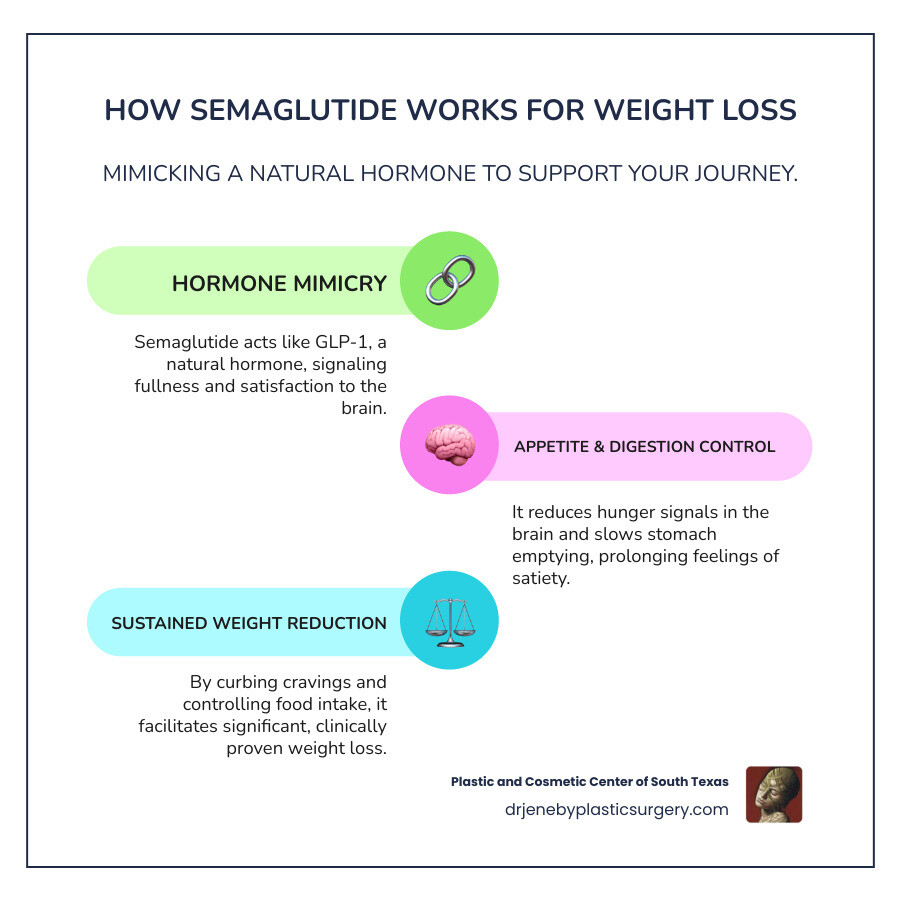
Think of semaglutide weight loss support as your body’s natural appetite control system getting a helpful boost. Semaglutide belongs to a class of medications called GLP-1 receptor agonists, which sounds complicated but works in a beautifully simple way.

Your body naturally produces a hormone called GLP-1 after you eat. This clever hormone sends “I’m full” signals to your brain and helps regulate your blood sugar. Semaglutide essentially mimics this natural hormone, but with much stronger and longer-lasting effects.
Here’s where it gets interesting for weight loss. When semaglutide activates those GLP-1 receptors, several powerful things happen. Your brain receives stronger satiety signals, meaning you feel satisfied with smaller portions and experience fewer cravings between meals. At the same time, semaglutide slows down gastric emptying – food stays in your stomach longer, keeping you feeling full for hours rather than minutes.
The science behind this is fascinating. Scientific research on GLP-1’s role shows how this hormone influences everything from appetite regulation to insulin production. When your stomach empties more slowly and your brain consistently receives “full” signals, you naturally consume fewer calories without feeling deprived.
For people with blood sugar concerns, semaglutide offers additional benefits by improving insulin sensitivity and reducing glucose production in the liver. This dual action makes it particularly valuable for patients dealing with both weight management and metabolic health challenges.
Ozempic vs. Wegovy: What’s the Difference?
This question comes up in nearly every consultation, and for good reason. Both medications contain the exact same active ingredient – semaglutide – but they’re designed for different primary purposes.
Ozempic received FDA approval in 2017 specifically for managing type 2 diabetes. You can review the complete Ozempic FDA approval details to understand its original intended use. While patients often experience significant weight loss with Ozempic, this happens as a welcome side effect rather than the main goal.
Wegovy made headlines when it received FDA approval in 2021 as the first medication approved for chronic weight management since 2014. The Wegovy FDA approval details mark a significant milestone in obesity treatment.
The key difference lies in dosage and purpose. Wegovy contains higher doses of semaglutide – up to 2.4 mg weekly – specifically calibrated for maximum weight loss effectiveness. Ozempic typically uses lower doses focused on blood sugar control.
This distinction matters tremendously for insurance coverage and treatment planning. While doctors sometimes prescribe Ozempic off-label for weight loss, Wegovy remains the only FDA-approved semaglutide formulation specifically designed for semaglutide weight loss support. Understanding this difference helps ensure you receive the most appropriate treatment for your specific health goals.
The Power of Semaglutide Weight Loss Support: Benefits and Effectiveness
When it comes to semaglutide weight loss support, the results speak for themselves. We’re not talking about modest improvements here – we’re looking at life-changing outcomes backed by some of the most rigorous clinical research in obesity medicine.

The STEP clinical trials revolutionized how we think about weight loss treatment. In the groundbreaking STEP 1 trial, participants using semaglutide lost an average of 15% of their body weight over 68 weeks. That’s not a typo – fifteen percent! Even more impressive, nearly one-third of participants lost 20% or more of their starting weight.
To put this in perspective, imagine weighing 200 pounds and losing 30 to 40 pounds with semaglutide weight loss support. Compare that to the control group in the same study, who focused only on lifestyle changes and lost about 2.4% of their weight. The difference is remarkable and frankly, life-changing for many people.
These aren’t just numbers on a scale either. The landmark study in NEJM showed that participants experienced significant improvements in their overall health. Blood pressure dropped, cholesterol levels improved, and blood sugar control got better across the board.
What really excites me as a physician is how these improvements translate to real health benefits. We’re seeing reduced risk of heart disease, better body composition, and improvements in cardiometabolic factors that matter for long-term health. The SELECT trial took this even further, showing a 20% reduction in major cardiovascular events over four years in people with pre-existing heart conditions.
This level of weight loss approaches what we sometimes see with surgical interventions, but without the invasiveness. For patients who have struggled for years with traditional diet and exercise approaches, semaglutide weight loss support offers hope and real results.
Comparing Semaglutide to Other Weight Loss Medications
When patients ask me about their options for weight loss medications, I always emphasize that semaglutide stands out in the GLP-1 agonist family for good reason. While several medications are available for weight management, the effectiveness varies significantly.
| Medication | Active Ingredient(s) | Administration | Primary Mechanism | Typical Weight Loss (RCTs) | Common Side Effects |
|---|---|---|---|---|---|
| Semaglutide (Wegovy) | Semaglutide | Weekly Injection | GLP-1 mimetic: appetite suppression, slows gastric emptying | 15-20% of body weight | Nausea, vomiting, diarrhea, constipation, abdominal pain |
| Liraglutide (Saxenda) | Liraglutide | Daily Injection | GLP-1 mimetic: appetite suppression, slows gastric emptying | 5-10% of body weight | Nausea, vomiting, diarrhea, constipation, abdominal pain |
| Naltrexone/Bupropion (Contrave) | Naltrexone, Bupropion | Oral (Daily) | Affects brain pathways related to hunger and cravings | 5-9% of body weight | Nausea, constipation, headache, dry mouth, dizziness |
| Orlistat (Xenical) | Orlistat | Oral (with meals) | Blocks fat absorption in the gut | 2-3% of body weight | Oily spotting, flatulence, fecal urgency, steatorrhea |
Liraglutide, also a GLP-1 agonist, works through similar mechanisms but requires daily injections and typically produces 5-10% weight loss. While that’s still meaningful, it doesn’t match semaglutide’s impressive results.
Naltrexone/bupropion takes a different approach by affecting brain pathways related to hunger and cravings. It’s convenient as an oral medication, but the 5-9% weight loss it typically produces falls short of what many patients need to achieve their health goals.
Orlistat works by blocking fat absorption in your digestive system, but its 2-3% weight loss results are modest. Plus, the gastrointestinal side effects can be quite uncomfortable and socially awkward for many patients.
What makes semaglutide weight loss support superior is not just the impressive weight loss numbers, but the sustained results we see in clinical practice. In head-to-head studies, semaglutide consistently outperformed other options, giving patients the best chance at achieving meaningful, long-term weight loss success.
The weekly injection schedule is also more convenient than daily medications, and while side effects can occur, they’re generally manageable and often improve over time with proper dosing strategies.
Is Semaglutide Right for You? Candidacy and Potential Side Effects

Figuring out if semaglutide weight loss support is right for you isn’t a one-size-fits-all decision. At our practice, we take time to understand your unique health story and goals before making any recommendations. The FDA has given us clear guidelines about who benefits most from Wegovy, and these criteria help ensure you get the best possible results while staying safe.
The magic number we look at first is your Body Mass Index, or BMI. If your BMI is 30 or higher, you’re considered a candidate for semaglutide. That’s the obesity threshold where the benefits typically outweigh the risks. But here’s where it gets interesting – even if your BMI is between 27 and 29.9, you might still be a perfect candidate if you’re dealing with weight-related health conditions like high blood pressure, type 2 diabetes, or high cholesterol.
Think of these criteria as guardrails, not barriers. They’re designed to identify people who will see the most dramatic improvements in both their weight and overall health.
Now, let’s talk about the flip side – who shouldn’t use semaglutide. This is where your medical history becomes incredibly important. If you or anyone in your family has had medullary thyroid carcinoma (a rare thyroid cancer) or Multiple Endocrine Neoplasia syndrome type 2, semaglutide isn’t for you. We also need to be cautious if you’ve had pancreatitis in the past, since there’s a small chance semaglutide could trigger it again.
Pregnancy is another absolute no-go. If you’re expecting or planning to conceive, we’ll need to pause any semaglutide weight loss support and discuss alternative approaches. The medication needs to be stopped several months before you start trying for a baby.
Understanding Your Candidacy for Semaglutide Weight Loss Support
Let’s be honest about side effects – they’re real, but they’re usually manageable. The good news is that most people experience only mild gastrointestinal symptoms that improve over time. Nausea is the most common complaint, followed by diarrhea, vomiting, constipation, and abdominal pain. I know that sounds like a laundry list of unpleasantness, but here’s the thing – these symptoms are typically worst in the beginning and fade as your body adjusts.
We’ve learned that starting low and going slow makes all the difference. Instead of jumping straight to the full dose, we begin with a tiny amount and gradually increase it over several weeks. This gentle approach gives your digestive system time to adapt, and most patients find the side effects much more tolerable this way.
The more serious risks are rare, but we discuss them thoroughly because your safety is our top priority. Thyroid C-cell tumors are why we ask so many questions about your family history. Pancreatitis shows up as severe abdominal pain that doesn’t go away – if you experience this, we need to know immediately.
Gallbladder problems can occur with any rapid weight loss, not just from semaglutide. When you lose weight quickly, your body sometimes forms gallstones. We monitor for this and can catch it early if it happens.
Kidney issues usually stem from dehydration, which is why we emphasize staying well-hydrated, especially if you’re experiencing nausea or vomiting. Think of water as your best friend during this journey.
If you’re already taking diabetes medications, particularly insulin or sulfonylureas, we need to watch for low blood sugar. The combination can be powerful, and we might need to adjust your other medications to keep everything balanced.
Some patients notice their heart rate increases slightly, and those with diabetic eye problems might see temporary changes in their vision. Very rarely, people experience mood changes or thoughts of self-harm – if this happens, please reach out to us immediately.
We always review every medication you’re taking before starting semaglutide weight loss support. Drug interactions are manageable when we know about them upfront, but surprises can cause problems. Your complete medical picture helps us create the safest, most effective plan for your weight loss journey.
Navigating Your Semaglutide Journey
Starting your semaglutide weight loss support journey feels like a big step, and honestly, it should feel that way – because it is! This isn’t something you tackle alone. From day one, you’ll have our experienced healthcare team by your side, guiding you through every aspect of this transformative process.
Your journey begins with a thorough consultation and medical evaluation. We’ll sit down together and review your complete health history, current medications, and personal weight loss goals. This isn’t just a checkbox exercise – we’re looking at the whole picture of your health to make sure semaglutide weight loss support is not only safe for you, but also the best path forward for achieving your goals.
Once we determine that semaglutide is right for you, we’ll provide you with a prescription and walk you through everything you need to know. The medication comes as a weekly subcutaneous injection, which might sound intimidating at first, but it’s actually quite simple. We’ll demonstrate the proper technique and make sure you’re completely comfortable before you head home. Most patients are surprised at how easy it becomes part of their weekly routine.
The dosing schedule follows a careful, gradual approach. We start you on a low dose and slowly increase it over several weeks or months. This isn’t us being overly cautious – it’s actually the smartest way to help your body adjust comfortably while minimizing those pesky side effects we discussed earlier.
Here’s something important to understand: semaglutide weight loss support is a long-term commitment, not a sprint to the finish line. Obesity is a chronic disease, much like diabetes or high blood pressure, and it typically requires ongoing management. Clinical studies show there’s a risk of weight regain after stopping semaglutide, and this isn’t because the medication “stops working” or because you’ve done anything wrong. It’s simply how our bodies are wired – they tend to resist weight loss and promote regain as a survival mechanism.
We need to address something that’s been causing concern in the weight loss community: the rise of “generic” or compounded semaglutide from various sources. The FDA has issued strong warnings about these products, particularly from certain compounding pharmacies. While legitimate compounding can serve important medical needs, the FDA has documented adverse events and safety concerns with some compounded versions that don’t contain the same active ingredient found in FDA-approved Ozempic or Wegovy. You can read more about these FDA warnings on “generic” semaglutide to understand the risks. Your safety is our top priority, which is why we only work with authentic, FDA-approved medications from reputable sources.
Long-Term Success with Semaglutide Weight Loss Support
Let’s be honest about something: semaglutide weight loss support is powerful, but it’s not a magic wand. For real, lasting success, the medication needs to work alongside fundamental lifestyle changes. This means embracing a reduced-calorie diet and increased physical activity – but here’s the good news: semaglutide makes these changes so much easier by controlling your appetite and reducing those constant food cravings.
Think of it this way: the medication gives you the tools, but you’re still the one building the house. Behavioral therapy and nutritional guidance become your blueprint for success. These aren’t just nice-to-have extras – they’re essential components that help you develop sustainable habits for both weight loss and overall well-being.
The research on long-term effectiveness is genuinely encouraging. Studies show that patients can maintain significant weight loss for extended periods when they combine semaglutide with lifestyle changes. This aligns perfectly with our growing understanding that obesity requires ongoing management, and that early treatment for obesity is crucial for preventing progression and improving long-term health outcomes.
Now, let’s talk about the elephant in the room: insurance coverage. While Wegovy is FDA-approved for weight management, getting insurance to cover it can be frustrating. The statistics tell the story – in Canada, fewer than 20% of private drug plans currently cover obesity medications. Here in the United States, the situation varies dramatically by region, specific insurance plan, and employer policies. Sometimes coverage is only available if you have certain weight-related health conditions.
We understand this financial barrier can feel overwhelming, and we’re committed to working with you to explore every available option. This might include manufacturer savings programs, appealing insurance denials, or finding alternative coverage pathways. Our goal is to make semaglutide weight loss support as accessible as possible for patients who can truly benefit from it, because we believe your health and well-being shouldn’t be determined by insurance fine print.
Frequently Asked Questions about Semaglutide
When patients come to our practice asking about semaglutide weight loss support, they often have the same thoughtful questions. I’ve been helping people achieve their health and aesthetic goals for over 20 years, and I understand that making an informed decision about weight loss medication requires clear, honest answers.
How much weight can I realistically lose with semaglutide?
The results with semaglutide weight loss support can be truly life-changing, but let’s talk about what you can realistically expect. In the major STEP clinical trials, participants using the full 2.4 mg weekly dose lost an average of 15% of their body weight over 68 weeks. That means if you weigh 200 pounds, you might lose around 30 pounds on average.
What’s even more encouraging is that nearly one-third of people in these studies lost 20% or more of their total body weight. Some patients in my practice have achieved results that approach what we might see with bariatric surgery, but without the invasiveness.
Your individual results will depend on several personal factors. Your starting weight, how well you tolerate the medication, and most importantly, your commitment to the lifestyle changes we discuss together all play a role. Some people lose more than the average, while others may lose less. The key is understanding that semaglutide weight loss support makes the process significantly easier by controlling your appetite and cravings, but you’re still an active partner in your success.
What happens if I stop taking semaglutide?
This is probably the most important question we discuss, and I want to be completely transparent with you. When you stop taking semaglutide, there’s a real risk that you’ll regain much of the weight you’ve lost. This isn’t a failure on your part – it’s simply how obesity works as a chronic medical condition.
Think of obesity like high blood pressure or diabetes. When someone stops taking their blood pressure medication, their pressure typically returns to previous levels. The same principle applies here. Once you discontinue semaglutide, your body’s natural hunger signals return, your stomach empties faster again, and those metabolic changes that helped you lose weight begin to reverse.
This is why we approach semaglutide weight loss support as a long-term management strategy, not a short-term fix. Your body has adapted over years or decades to maintain a higher weight, and it takes ongoing effort to maintain your new, healthier weight. We work together to develop a comprehensive plan that may include continued medication, consistent lifestyle habits, and regular check-ins to help you maintain your results.
Are there non-injectable versions of semaglutide?
Yes, there is an oral form called Rybelsus, but it’s important to understand the differences. Rybelsus was primarily developed and approved for treating type 2 diabetes, not specifically for weight management like Wegovy.
While Rybelsus does contain semaglutide, the weight loss results are generally less dramatic than what we see with the higher-dose injectable version. The oral medication has lower bioavailability, meaning less of the active ingredient actually gets into your system. It also comes with specific timing requirements – you need to take it on an empty stomach with just a small amount of water, then wait before eating or drinking anything else.
For significant semaglutide weight loss support, the weekly injectable Wegovy remains the gold standard. The 2.4 mg dose specifically studied for weight management consistently shows superior results compared to the oral formulation. While some people prefer the idea of a pill over an injection, the injection is actually quite simple – it’s a small, thin needle that most patients find much easier than they expected.
If you’re concerned about injections, we’ll walk you through the process step by step during your consultation. Many patients tell me they were surprised by how manageable it became part of their weekly routine.
Conclusion
Semaglutide weight loss support has truly changed the game for people struggling with obesity. This isn’t just another fad or quick fix – it’s a scientifically proven medication that can help you lose significant weight while improving your overall health. By working with your body’s natural hunger signals, semaglutide makes it easier to stick to healthier eating habits and see real, lasting results.
But here’s the thing we always tell our patients: semaglutide is like having a really good teammate, not a magic wand. You’ll still need to put in the work with healthy eating and regular exercise. The difference is that semaglutide makes that work feel more manageable. Instead of fighting constant hunger and cravings, you’ll find it easier to make the choices that support your goals.
At the Plastic and Cosmetic Center of South Texas, we understand that feeling confident in your body goes beyond just the procedures we perform. Dr. Jeneby and our experienced team of board-certified plastic surgeons know that true wellness starts from within. Whether you’re considering semaglutide weight loss support as a first step or as part of a broader change journey, we’re here to support you every step of the way.
We’ve seen how life-changing it can be when patients finally find a weight management approach that works for them. The confidence that comes with achieving your health goals often extends into every area of life. And with our comprehensive range of cosmetic procedures, spa services, and in-house financing options, we can help you look and feel your absolute best.
Your weight management journey is unique to you, and it deserves professional guidance from people who truly care about your success and safety. Don’t let another year go by wondering “what if?”
Ready to explore if semaglutide weight loss support could be the missing piece in your wellness puzzle? Schedule a personalized weight management consultation with our team today. Let’s work together to create a plan that fits your life and helps you achieve the healthy, confident future you deserve.


