


Introduction
Is breast augmentation safe? This is the first question many people ask when considering this popular procedure. Breast augmentation, also known as augmentation mammaplasty, aims to enhance the size and shape of the breasts using implants or fat transfer. While it offers many benefits, it’s crucial to evaluate the associated safety concerns.
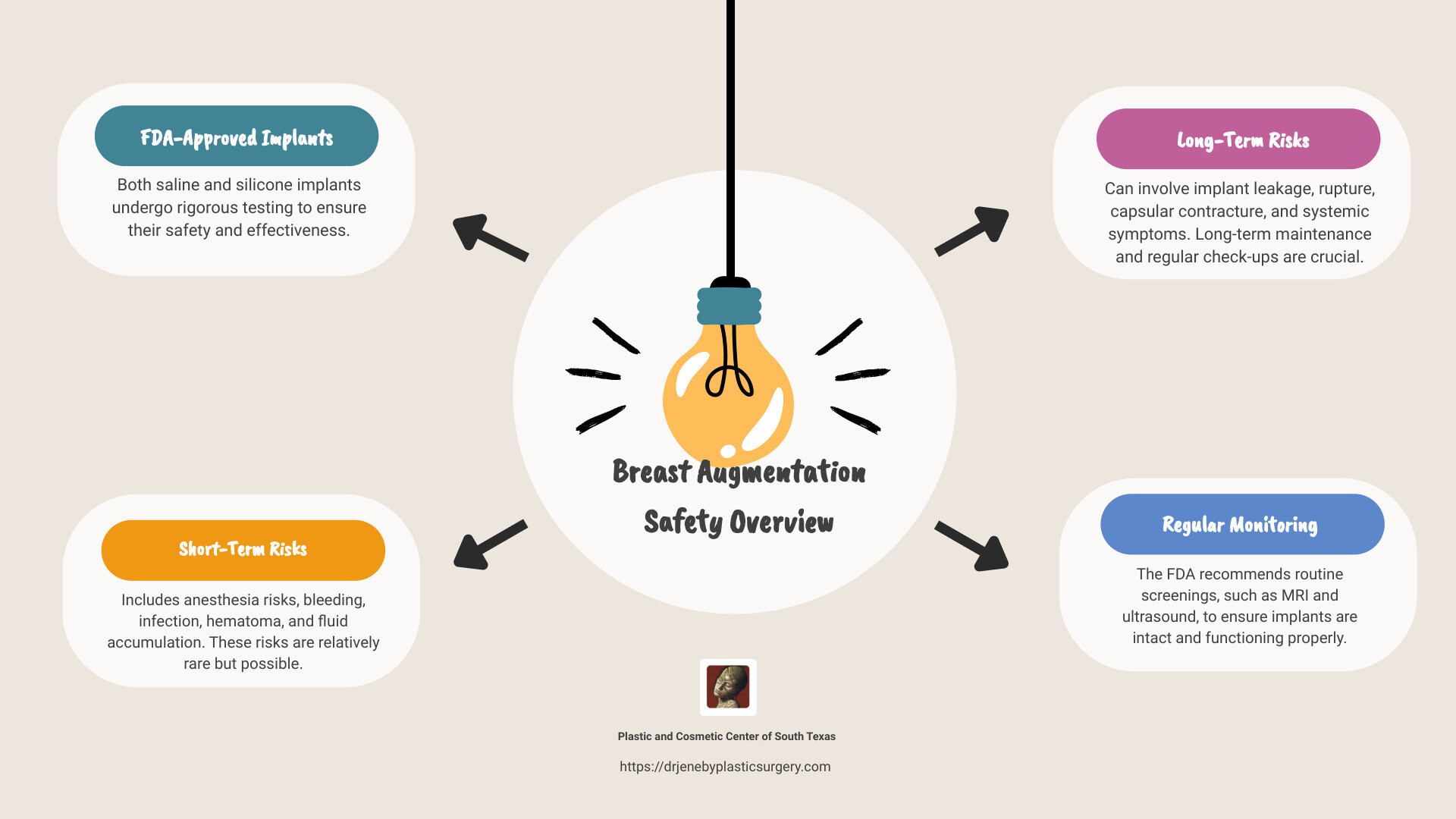
Here’s a quick overview of the main safety points:
- FDA-approved implants: Both saline and silicone implants undergo rigorous testing.
- Short-term risks: Includes anesthesia risks and infection.
- Long-term risks: Can involve implant leakage, rupture, or capsular contracture.
- Regular monitoring: The FDA recommends routine screenings to ensure implants are intact.
Breast augmentation has become increasingly safe due to advancements in surgical techniques and implant technology. However, like any surgical procedure, it carries potential risks and complications that should be thoroughly discussed with a board-certified plastic surgeon.
When contemplating breast augmentation, it’s essential to weigh both the benefits and risks. Factors such as personal health, lifestyle, and long-term maintenance should be carefully considered to make an informed decision.
Understanding Breast Augmentation
Breast augmentation, also known as augmentation mammaplasty, is a surgical procedure aimed at enhancing the size, shape, or fullness of the breasts. This can be achieved using breast implants or fat transfer.
Breast Implants
Breast implants are medical devices placed inside the breast to improve its appearance. There are several types of breast implants to choose from, each with its own characteristics:
- Silicone Implants: These consist of a silicone rubber shell filled with cohesive silicone gel. They closely resemble the feel of natural breast tissue and are FDA-approved for individuals aged 22 and older.
- Saline Implants: These have a silicone shell filled with sterile saline solution. If they leak, the body easily absorbs the saline. They are FDA-approved for individuals aged 18 and above.
- Gummy Bear Implants: These are made of a thicker, cohesive silicone gel that retains its shape even if the shell breaks. They are firmer and provide a more natural touch but may require longer incisions.
Fat Transfer Breast Augmentation
Another method is fat transfer breast augmentation, which uses a patient’s own fat to enhance breast volume. This involves:
- Liposuction: Removing fat from areas like the abdomen, thighs, or flanks.
- Processing: Purifying the fat to remove impurities.
- Injection: Injecting the purified fat into the breasts to achieve the desired shape and volume.
This method is considered more natural but may not provide as dramatic a size increase as implants.
Procedure Details
The breast augmentation procedure typically includes:
- Consultation: Discussing goals, options, and potential risks with a board-certified plastic surgeon.
- Anesthesia: Administering general anesthesia to ensure patient comfort.
- Incision: Making an incision in one of several possible locations (under the breast, around the nipple, or in the armpit).
- Placement: Inserting the implant either under the breast tissue or beneath the chest muscle.
- Closure: Closing the incisions with sutures or surgical tape.
The entire procedure usually takes about 1-2 hours, and patients can often go home the same day.
Breast augmentation can be a life-changing procedure for many, providing increased confidence and satisfaction with one’s appearance. However, it’s crucial to understand the different techniques and options available to make an informed decision that aligns with your personal goals and health considerations.
Is Breast Augmentation Safe?
When considering breast augmentation, one of the most frequently asked questions is: is breast augmentation safe? The answer involves understanding both short-term and long-term risks, as well as the safety measures in place.
FDA Approval and Extensive Testing
Breast implants, whether saline or silicone, must pass rigorous testing before receiving FDA approval. This testing ensures a reasonable assurance of safety and effectiveness. The vast majority of people with breast implants experience no serious complications. However, it’s important to be aware of potential risks.
Short-Term Risks
Anesthesia Risks: As with any surgery, anesthesia carries risks. Some patients may experience adverse reactions, although these are rare.
Bleeding: Post-operative bleeding can occur, which may necessitate further surgery to control.
Infection: According to the National Institute of Health, the incidence rate of breast implant infection ranges from 1 to 2.5%. While this percentage is minimal, it underscores the need for meticulous surgical hygiene and patient care.
Hematoma: This involves the accumulation of blood around the implant, which can cause swelling and pain.
Fluid Accumulation (Seroma): Fluid buildup around the surgical site can occur and may require drainage.
Long-Term Risks
Implant Rupture: Both saline and silicone implants can rupture. Saline ruptures are usually immediately noticeable as the breast deflates. Silicone ruptures, often termed “silent ruptures,” may not be immediately apparent and require an MRI or ultrasound for detection.

Capsular Contracture: This occurs when scar tissue forms tightly around the implant, causing discomfort and altering the breast’s appearance. It’s one of the more common complications and can necessitate additional surgery.
Systemic Symptoms and Breast Implant Illness (BII): Some patients report symptoms such as fatigue, “brain fog,” and joint pain, collectively referred to as breast implant illness (BII). While the causes are not fully understood, some patients find symptom relief after implant removal.
Breast Implant-Associated Anaplastic Large Cell Lymphoma (BIA-ALCL): This rare cancer occurs in the capsule around the implant. It is more commonly associated with textured implants. Symptoms include swelling and lumps around the implant.
Breast Implant-Associated Squamous Cell Carcinoma (BIA-SCC): Another rare but serious risk, BIA-SCC, involves the development of a tumor in the capsule around the implant.
While these risks may seem daunting, it’s important to remember that the vast majority of breast augmentation patients do not experience severe complications. Regular check-ups and following your surgeon’s advice can help manage and mitigate these risks effectively.
Safety and Effectiveness
Overall, breast implants have been deemed safe for use, and the technology continues to improve. As Dr. Andrea Pusic from Harvard Medical School notes, “Breast implant surgery has never been safer, because the implant technology has improved and leak rates are lower than ever.”
Next, we’ll explore the different types of breast implants available and how to choose the right one for you.
Types of Breast Implants
Saline vs. Silicone
When considering breast augmentation, one of the first decisions you’ll face is choosing between saline and silicone implants. Both have their pros and cons, and understanding these can help you make an informed choice.
Saline-Filled Implants
Saline implants are filled with sterile salt water. They are inserted empty and filled once they’re in place. This makes the surgery a bit more flexible in terms of adjusting the implant size during the procedure.
Key Points:
– Safety: If a saline implant leaks, your body absorbs the saline solution without harm.
– Age Requirement: Available for augmentation in people aged 18 and older.
– Feel: Some people feel that saline implants are less natural in texture compared to silicone.
Silicone Gel-Filled Implants
Silicone implants are pre-filled with silicone gel, which many believe feels more like natural breast tissue. They come in various sizes and shapes to fit different body types and aesthetic goals.
Key Points:
– Safety: Silicone implants are FDA-approved for augmentation in people aged 22 and older.
– Silent Rupture: A tear in a silicone implant might not be noticeable immediately, known as a “silent rupture.” The silicone gel tends to stay within the surrounding scar tissue.
– Feel: Often considered to look and feel more like natural breast tissue.
Textured vs. Smooth Implants
Textured Implants:
– Designed to create scar tissue that sticks to the implant, making them less likely to move around.
– Have been associated with a low risk of a type of lymphoma known as breast implant-associated anaplastic large cell lymphoma (BIA-ALCL).
Smooth Implants:
– Move more freely within the breast implant pocket, which can give more natural movement.
– Have a lower risk of rippling compared to textured implants.
Screening and Monitoring
MRI Screening:
– Silicone Implants: The FDA recommends MRI screenings three years after the initial surgery and every two years after that to check for silent ruptures. However, this can be costly and inconvenient for many.
Ultrasound Screening:
– Easier Option: The FDA now recommends ultrasound as a more accessible and cost-effective alternative for routine checks. If potential problems are detected, an MRI can be used to confirm them.
Regular monitoring is essential to ensure the longevity and safety of your implants. Always follow your surgeon’s recommendations for routine check-ups.
Next, we’ll discuss potential complications that can arise with breast implants and how to manage them.
Potential Complications
BIA-ALCL
Breast Implant-Associated Anaplastic Large Cell Lymphoma (BIA-ALCL) is a rare type of lymphoma linked to breast implants. It is not a breast cancer but a cancer of the immune system. BIA-ALCL occurs mainly in patients with textured implants.
Symptoms of BIA-ALCL include:
– Swelling around the implant
– A lump in the breast or armpit
– Persistent breast pain
Treatment for BIA-ALCL often involves:
– Capsulectomy: Removal of the implant and the surrounding scar tissue (capsule)
– Advanced cases: May require chemotherapy, radiation, or even stem cell transplantation
Early diagnosis and treatment are crucial. If you notice any of these symptoms, consult your surgeon immediately.
BIA-SCC
Breast Implant-Associated Squamous Cell Carcinoma (BIA-SCC) is a newly recognized, rare tumor that can develop in the scar tissue around the implant. Unlike BIA-ALCL, BIA-SCC has been reported in both textured and smooth implants.
Symptoms of BIA-SCC include:
– Pain and swelling
– Fluid buildup
– Redness around the implant
Treatment for BIA-SCC typically involves:
– Surgical removal: Of the implant and surrounding scar tissue
– Advanced cases: Might need more extensive surgery
BIA-SCC is more aggressive than BIA-ALCL, with a higher mortality rate. Awareness and prompt medical attention are essential.
Additional Surgeries
Additional surgeries may be needed over the lifetime of your breast implants. Reasons for additional surgeries include:
– Capsular Contracture: Tightening of the scar tissue around the implant, causing pain and deformity
– Implant Rupture or Leakage: Requiring removal or replacement of the implant
– Infection: Sometimes necessitating implant removal
Implant Removal
Implant removal can be done in two ways:
– Implant Alone: Removing just the implant, leaving the scar tissue in place
– En-bloc Resection: Removing the implant and the surrounding scar tissue
Discuss with your surgeon which method is best for your situation.
Capsular Contracture
Capsular contracture is a common complication where the scar tissue around the implant tightens. This can cause:
– Pain
– Changes in breast shape
– Hardening of the breast
Treatment often involves:
– Capsulectomy: Removal of the scar tissue and implant
– Revision Surgery: Sometimes replacing the implant with one that has a special coating to prevent future contracture
Monitoring and Maintenance
Routine monitoring and maintenance are crucial for the longevity and safety of your breast implants. Follow your surgeon’s recommendations for regular check-ups, including MRI or ultrasound screenings.
In the next section, we’ll address frequently asked questions about breast augmentation safety.
Monitoring and Maintenance
Routine monitoring and maintenance are crucial for the longevity and safety of your breast implants. Follow your surgeon’s recommendations for regular check-ups, including MRI or ultrasound screenings.
Routine Exams
Regular exams by your healthcare provider help ensure your implants are in good condition. The FDA recommends women with silicone implants get screened for leaks every two years. This helps catch issues early before they become serious health risks.
MRI and Ultrasound
Initially, the FDA recommended using MRI for routine screenings. Although effective, MRIs are costly and can cause anxiety for some women. Each MRI can cost up to $2,000 out of pocket. Now, the FDA suggests ultrasound as a cheaper, easier alternative for routine checks. If an ultrasound detects a problem, an MRI can confirm it.
FDA Recommendations
Here’s what the FDA advises for women with breast implants:
– Routine Monitoring: Start with an ultrasound or MRI five to six years after your initial surgery.
– Regular Screenings: Continue with these screenings every two to three years after the first one.
– Immediate Checks: If you notice any changes or have concerns, contact your healthcare provider immediately.
Implant Lifespan
Breast implants are not lifetime devices. The longer you have them, the more likely you are to experience complications. According to the FDA, many women will need additional surgery within 10 years. These surgeries can address issues like ruptures, leaks, or capsular contracture.
Key Points
- Regular exams are essential.
- Use ultrasound for routine checks.
- Follow up with MRI if issues are detected.
- Implants may need replacement within 10 years.
In the next section, we’ll address frequently asked questions about breast augmentation safety.
Frequently Asked Questions about Breast Augmentation Safety
What are the risks of breast augmentation?
Breast augmentation, like any surgery, comes with risks. Some of the short-term risks include:
- Anesthesia risks: Complications from anesthesia can occur, though they are rare.
- Bleeding: Post-surgery bleeding can happen and may require additional medical attention.
- Infection: According to the National Institute of Health, the incidence rate of infection ranges from 1 to 2.5%.
- Hematoma: This is a collection of blood outside the blood vessels, which can cause swelling and pain.
- Fluid accumulation (seroma): Fluid can accumulate around the implant, requiring drainage.
Long-term risks include:
- Capsular contracture: This occurs when scar tissue forms tightly around the implant, causing discomfort and changes in breast appearance.
- Implant rupture: Both saline and silicone implants can rupture. Saline ruptures are noticeable immediately, while silicone ruptures may require an MRI to detect.
- Breast implant-associated anaplastic large cell lymphoma (BIA-ALCL): A rare type of lymphoma linked to textured implants.
- Breast implant-associated squamous cell carcinoma (BIA-SCC): Another rare cancer associated with breast implants.
- Breast implant illness (BII): Some patients report systemic symptoms like fatigue, brain fog, and joint pain.
Is breast augmentation a serious surgery?
Yes, breast augmentation is considered a major surgery. Here’s why:
- Anesthesia: General anesthesia is typically used, which carries its own set of risks.
- Complications: These can include bleeding, infection, and adverse reactions to anesthesia.
- Recovery: The recovery period can involve significant pain and requires careful monitoring.
Dr. Andrea Pusic at Harvard Medical School emphasizes that “surgery is a serious decision, and devices aren’t perfect.” This underscores the importance of understanding all the risks involved.
Is breast augmentation safe long term?
Long-term safety is a critical consideration:
- Implant lifespan: Breast implants are not lifetime devices. The FDA notes that many women will need additional surgery within 10 years to address complications like ruptures or capsular contracture.
- Complications: Long-term complications can include implant rupture, capsular contracture, and systemic symptoms.
- Reoperation: Many women may require additional surgeries to replace or remove implants.
- Cosmetic outcome: Factors like aging, pregnancy, and weight changes can affect the appearance of augmented breasts over time.
Routine exams and screenings are essential to monitor the condition of your implants. The FDA recommends MRI or ultrasound screenings five to six years after silicone implant placement, and every two to three years thereafter.
By staying informed and vigilant, you can better manage the long-term safety of your breast implants.
Conclusion
Breast augmentation is a significant decision that requires careful consideration. With proper planning and a focus on safety, many women find it to be a rewarding experience.
Patient safety is our top priority. At the Plastic and Cosmetic Center of South Texas, we ensure you are fully informed about the procedure, potential risks, and necessary follow-ups. Our board-certified surgeons are committed to providing the highest quality care.
Informed decisions are crucial. We offer extensive consultations to discuss your goals, answer your questions, and evaluate your breast anatomy. This helps us tailor the procedure to your specific needs and ensure you have realistic expectations.
Patient satisfaction is our ultimate goal. We use advanced techniques and a compassionate approach to deliver outstanding results and a smooth recovery process. We also provide various in-house financing options to make the surgery accessible without compromising on quality or care.
By choosing the Plastic and Cosmetic Center of South Texas, you are investing in a team dedicated to your well-being and aesthetic goals. Feel confident and fulfilled with expert care and support throughout your breast augmentation journey.
For more information and to explore our services, please contact us. Let us help you take the first step towards the new you.


