


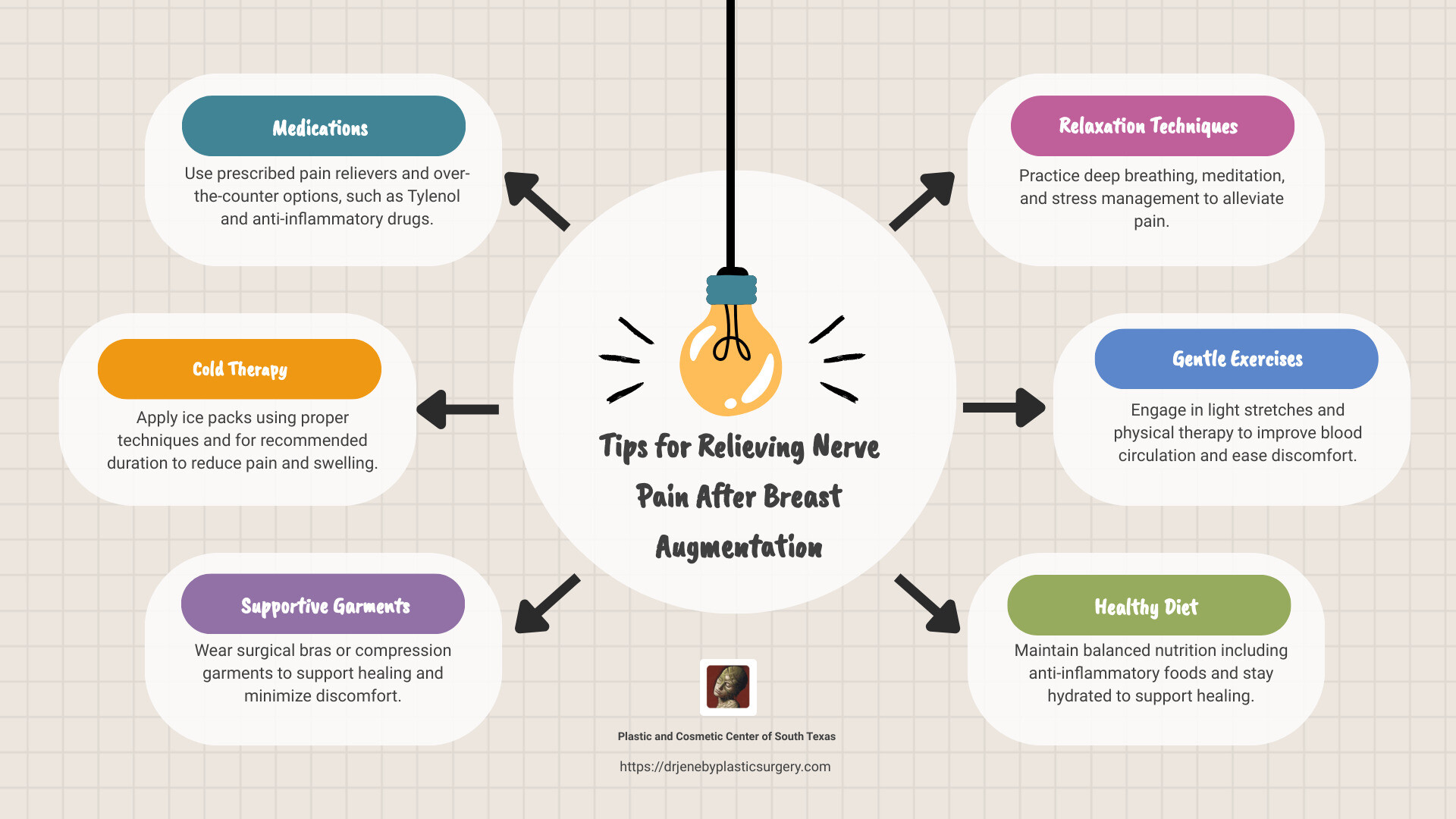
How to relieve nerve pain after breast augmentation is a common question for those recovering from this cosmetic procedure. Managing nerve pain effectively is crucial for ensuring a smooth recovery and improving overall quality of life. Here are a few quick tips to help:
- Use prescribed pain relievers and medications.
- Consider cold therapy like ice packs.
- Wear supportive garments such as surgical bras.
- Practice relaxation and gentle exercises to ease discomfort.
Nerve pain after breast augmentation can vary from mild to intense, and managing it should be a top priority for smooth recovery. Nerve pain may show up as numbness, burning, or stabbing sensations, affecting your daily activities. It’s essential to address these symptoms promptly to avoid prolonging discomfort.
At the Plastic and Cosmetic Center of South Texas, we prioritize patient safety and satisfaction. We are dedicated to giving you the best guidance and care during your post-surgery journey. Whether you’re local to San Antonio or considering a virtual consultation, our expert team is here to support your healing process, equipped with effective strategies to manage nerve pain.
Understanding Nerve Pain After Breast Augmentation
Nerve pain following breast augmentation can be a significant concern for many women. Understanding the causes and types of nerve pain, as well as the affected nerves and the healing process, can help you manage this discomfort better.
Causes of Nerve Pain
The primary cause of nerve pain after breast augmentation is surgical trauma. During the procedure, incisions are made to create pockets for the implants, which can irritate or injure nearby nerves. This is a normal part of the healing process, and while it can be uncomfortable, it often indicates that the nerves are regenerating.
Another factor contributing to nerve pain is the stretching of the skin and tissues to accommodate the new implants. This can cause a sensation of tightness and discomfort until the skin adjusts to the increased volume. The position of the implants, whether under the chest muscle or beneath the breast tissue, also affects the type and intensity of pain experienced.
Types of Nerve Pain
Nerve pain can vary widely among individuals. Here are some common types you might experience:
- Sharp, stabbing pain: Often felt during movement, this type of pain can be intense but usually subsides as the nerves heal.
- Burning or tingling sensations: These can occur as the nerves regenerate and are often described as “pins and needles.”
- Dull, aching pain: This is a more constant type of pain that can persist for several weeks post-surgery.
Affected Nerves
The nerves most commonly affected by breast augmentation include:
- Intercostal nerves: These nerves run between the ribs and can be stretched or compressed by the implant, especially if it is placed under the chest muscle.
- Thoracic nerves: These nerves are located in the upper back and chest area and can be affected by the surgical incisions and implant placement.
- Nipple nerves: Changes in sensation around the nipple area are common, and while this often resolves over time, it can be a source of discomfort initially.
Healing Process
The healing process for nerve pain after breast augmentation varies from person to person. Generally, you can expect some discomfort and swelling during the first week, with pain gradually subsiding over the following weeks. Most women see significant improvement by the second week, with minor residual discomfort lingering for up to six weeks.
It’s important to follow your surgeon’s post-operative care instructions closely to facilitate healing and manage pain effectively. Techniques such as cold therapy, supportive garments, and gentle exercises can help speed up recovery and reduce discomfort.
By understanding the causes, types, and healing process of nerve pain, you can better manage your recovery and get back to feeling your best.
Next, we will explore how to relieve nerve pain after breast augmentation using various methods, including medications, cold therapy, and supportive garments.
How to Relieve Nerve Pain After Breast Augmentation
Medications
Prescription Pain Relievers: Your surgeon may prescribe medications to help manage nerve pain after breast augmentation. These can be strong painkillers that target severe discomfort. Always follow your doctor’s instructions on dosage and frequency.
Over-the-Counter Options: Nonsteroidal anti-inflammatory drugs (NSAIDs) like ibuprofen can reduce pain and inflammation. Tylenol (acetaminophen) is another option that can help manage pain without causing stomach issues.
Gabapentin: This medication is often used for nerve pain. It can help reduce the burning or shooting sensations you might experience. Consult with your doctor to see if gabapentin is right for you.
Cold Therapy
Ice Packs: Applying ice packs can numb the area and reduce swelling. Wrap an ice pack in a thin cloth to avoid direct contact with the skin.
Application Techniques: Place the ice pack on the affected area for about 15 minutes at a time. Do this several times a day, especially during the first week post-surgery.
Duration: Use cold therapy as needed during the initial recovery phase, typically the first week. Always consult your surgeon for personalized advice.
Supportive Garments
Surgical Bras: These are specifically designed to support your breasts post-surgery. They help reduce swelling and stabilize implants.
Sports Bras: A comfortable sports bra without underwire can also provide support. Make sure it fits well but isn’t too tight.
Compression Garments: These can help minimize movement and provide additional support. Follow your surgeon’s recommendations on how long to wear them.
Relaxation Techniques
Deep Breathing: Simple deep breathing exercises can help reduce stress, which in turn can lessen pain. Try inhaling deeply through your nose and exhaling slowly through your mouth.
Meditation: Practicing meditation can help manage stress and pain. Even a few minutes a day can make a difference.
Stress Management: Activities like listening to calm music or spending time in nature can also help manage stress and reduce nerve pain.
Gentle Exercises
Light Stretches: Gentle stretching can improve blood circulation and help alleviate nerve pain. Always consult your surgeon before starting any exercise.
Physical Therapy: A structured physical therapy program can be very beneficial. It often includes range-of-motion exercises to keep tissues flexible without straining the affected area.
Blood Circulation Improvement: Regular, gentle movements can help improve blood flow, which is essential for healing. Simple activities like walking can be very helpful.
By incorporating these methods, you can effectively manage nerve pain and promote a smoother recovery after your breast augmentation surgery.
Additional Tips for Managing Nerve Pain
Managing nerve pain after breast augmentation involves more than just medications and exercises. Here are additional tips to help you on your journey to recovery.
Healthy Diet
Balanced Nutrition: Eating a well-balanced diet is crucial for healing. Include plenty of fresh fruits, vegetables, lean proteins, and whole grains. These foods provide essential nutrients that support tissue repair and reduce inflammation.
Anti-Inflammatory Foods: Incorporate foods known for their anti-inflammatory properties, such as fatty fish (like salmon), nuts, berries, and leafy greens. These can help reduce inflammation and potentially lessen nerve pain.
Hydration: Staying hydrated is equally important. Drink plenty of water throughout the day to keep your tissues hydrated and to help flush out toxins from your body.
Avoiding Irritants
Nicotine: Smoking can lower circulation and delay the healing process. If you smoke, consider quitting or reducing your intake to promote better healing.
Alcohol: Alcohol can interfere with the healing process and may exacerbate nerve pain. Try to avoid or minimize alcohol consumption during your recovery period.
Caffeine: While a cup of coffee might seem harmless, caffeine can increase anxiety and stress, which can intensify nerve pain. Limit your caffeine intake to help your body heal more efficiently.
Posture and Movement
Proper Alignment: Maintaining good posture is essential. Proper alignment reduces strain on your breasts and helps prevent additional nerve pain. Use pillows for support when sitting or lying down.
Avoiding Heavy Lifting: Refrain from lifting heavy objects for at least a few weeks post-surgery. This helps minimize pressure on your healing tissues and reduces the risk of complications.
Gradual Resumption of Activities: As you start feeling better, gradually resume your normal activities. Avoid jumping back into strenuous activities too soon. Listen to your body and follow your surgeon’s advice on when to increase your activity levels.
By incorporating these tips into your daily routine, you can better manage nerve pain and support a smoother recovery after breast augmentation surgery.
Frequently Asked Questions about Nerve Pain After Breast Augmentation
How long does nerve pain last after breast augmentation?
Nerve pain after breast augmentation can vary greatly between individuals. Generally, most patients experience improvement within a few weeks. However, it’s not uncommon for some discomfort to linger for up to three months. Healing timelines depend on factors like the surgical technique used, the size and type of implants, and individual pain tolerance.
Dr. Brandon Richland, MD, notes that “pain tolerance can vary significantly from person to person, which means some women may feel more pain than others during the post-surgery period.”
What helps nerve pain after breast surgery?
There are several effective methods to relieve nerve pain after breast augmentation:
Medications: Your doctor may prescribe pain relievers like gabapentin or recommend over-the-counter options like Tylenol and anti-inflammatory drugs. Always follow your physician’s instructions to avoid complications.
Cold Therapy: Applying ice packs wrapped in a cloth to the affected area for 20 minutes can help numb the nerves and reduce pain. Do this several times a day, especially within the first 48 hours post-surgery.
Supportive Garments: Wearing a surgical bra or a comfortable sports bra without underwire provides support and minimizes movement, helping to relieve nerve pain.
Is it normal to have uneven swelling after breast augmentation?
Yes, uneven swelling is quite common after breast augmentation. This happens because different parts of the breast may heal at different rates. Typically, this unevenness resolves within a few weeks.
However, if one side is significantly more swollen or painful than the other, it could be a sign of a complication, such as blood or fluid accumulation. In such cases, it’s crucial to consult your surgeon as soon as possible.
When to Consult a Surgeon?
Consult your surgeon if you experience any of the following:
- Persistent or worsening pain: If nerve pain doesn’t improve or worsens over time.
- Uneven swelling: Significant differences in swelling between breasts.
- Signs of infection: Redness, excessive swelling, or discharge from the incision site.
By addressing these concerns promptly, you can ensure a smoother recovery and reduce the risk of complications.
Conclusion
Managing nerve pain after breast augmentation is a vital part of your recovery. By understanding the causes and employing various strategies like medications, cold therapy, and supportive garments, you can significantly reduce discomfort and enhance your quality of life.
Following medical advice is crucial. Your surgeon’s guidance is tailored to your unique needs, ensuring you have the best possible outcome. Always consult your healthcare provider before trying new treatments or if you experience any unusual symptoms.
At the Plastic and Cosmetic Center of South Texas, we are dedicated to providing comprehensive care and support throughout your recovery journey. If you have any questions or need further assistance, please don’t hesitate to contact us for a consultation. Our experienced team is here to help you achieve a smooth and comfortable recovery.


