


Introduction
How much does a breast augmentation cost? This question is often top of mind for many contemplating the procedure.
Quick Answer:
– United States: $5,000 to $8,000
– Canada: $8,000 to $10,000
– Mexico: $2,800 to $5,500
– Australia: $6,000 to $12,000
Breast augmentation is a popular way to enhance appearance and boost self-confidence. But, like any investment, it’s crucial to understand the financial side.
Breast implant surgery costs can vary widely. They depend on several factors, including the type of implant, the surgeon’s experience, and location. It’s also important to consider additional expenses such as anesthesia, operating room fees, and post-surgery care.
Knowing what’s included in the price and what might be extra can help you budget effectively. We’ll break down these costs and more as we dive into the details.
For a quick reference on costs, check out the infographic below.
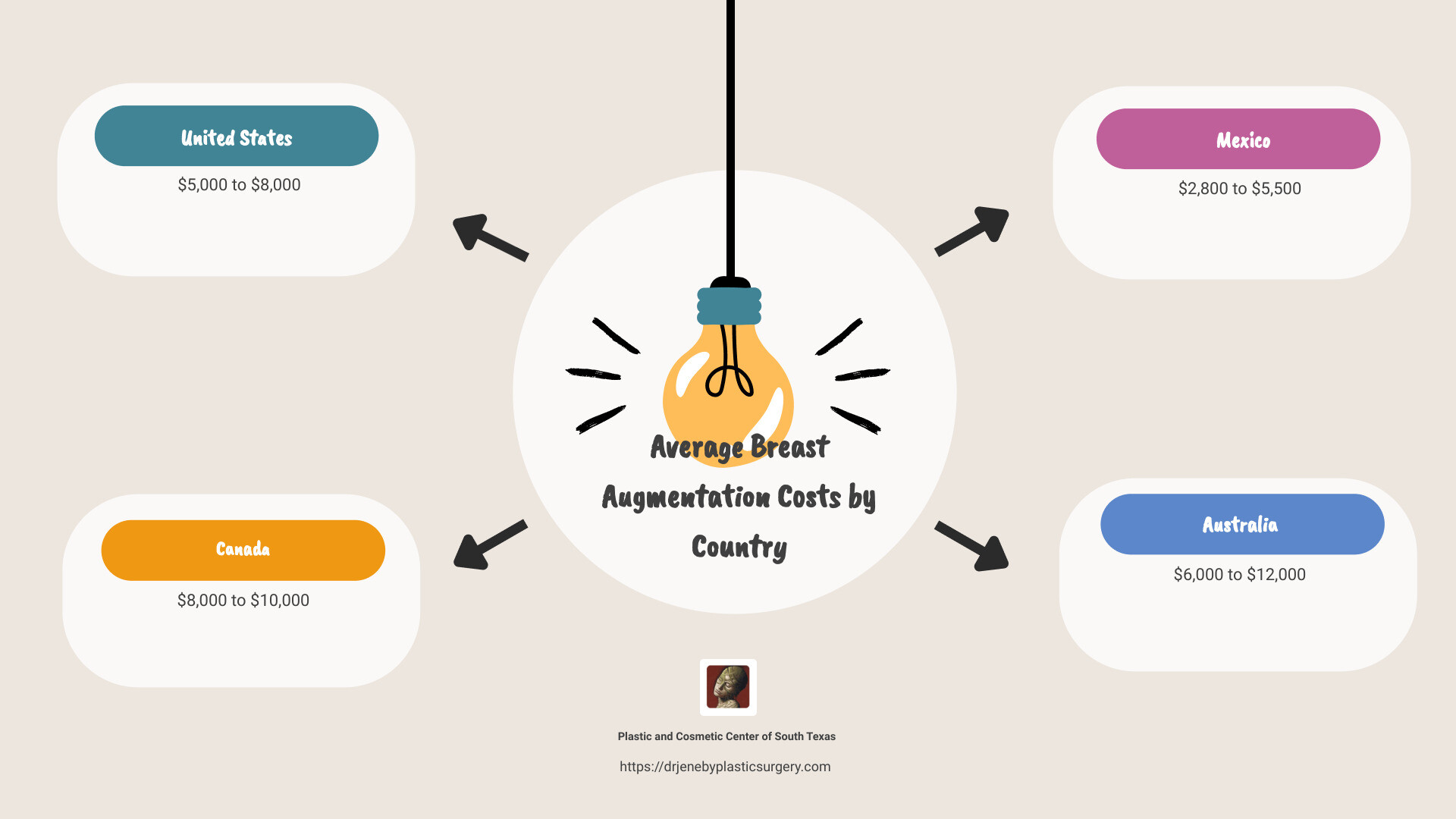
How Much Does a Breast Augmentation Cost?
Factors Influencing Cost
When considering how much does a breast augmentation cost, understand the factors that can influence the final price. Here are the main elements:
Surgeon’s Experience: More experienced surgeons often charge higher fees. Their expertise can significantly impact the outcome and safety of your procedure.
Procedure Type: The type of breast augmentation—whether implants, fat transfer, or a hybrid—affects the cost. Implants are generally less expensive than fat transfer or hybrid procedures.
Geographic Location: Costs vary by region. For example, procedures in high-cost living areas like New York or Los Angeles can be more expensive than in smaller cities or towns.
Cost Breakdown
According to the American Society of Plastic Surgeons, the average cost of a breast augmentation in 2020 ranged between $4,500 and $5,000. However, this figure primarily covers the surgeon’s fee. Let’s break down the additional costs you might encounter:
Anesthesia Fees: General anesthesia is typically required for breast augmentation, which can add significantly to the total cost. Fees can range from $600 to $800 or more depending on the anesthesiologist’s experience and the length of the procedure.
Operating Room Costs: These fees cover the use of the surgical facility and its equipment. They vary widely but can range from $800 to $2,000.
Medical Tests: Pre-surgery tests like blood work or a medical evaluation can add another $100 to $200 to your total.
Post-Surgery Garments: Special bras or compression garments are often required after surgery. These can cost between $50 and $100.
Prescriptions: Pain medications and antibiotics prescribed post-surgery can add another $50 to $100.
Surgeon’s Fee: As mentioned, the average surgeon’s fee is around $4,500 to $5,000. This fee compensates the surgeon for their expertise and time.
Here’s a quick overview of the potential costs involved:
| Cost Factor | Estimated Cost |
|---|---|
| Surgeon’s Fee | $4,500 – $5,000 |
| Anesthesia Fees | $600 – $800 |
| Operating Room Costs | $800 – $2,000 |
| Medical Tests | $100 – $200 |
| Post-Surgery Garments | $50 – $100 |
| Prescriptions | $50 – $100 |
Understanding these costs will help you prepare financially and avoid surprises. Always ask for a detailed quote from your surgeon to know exactly what’s included and what might be extra.
For a personalized quote and more information on financing options, contact the Plastic and Cosmetic Center of South Texas.
Next, we’ll explore the different types of breast implants and their costs.
Types of Breast Implants and Their Costs
When considering breast augmentation, it’s important to understand the different types of implants available and their associated costs. Here, we’ll look at saline vs. silicone implants, their pros and cons, and additional procedures that might affect the overall cost.
Saline vs. Silicone
Saline Implants
Saline implants are silicone shells filled with sterile salt water. They are inserted empty and then filled once they’re in place. This makes the incision smaller, which can be a benefit.
Pros:
– Generally less expensive than silicone implants.
– Adjustable size during surgery.
– If they leak, the saline is safely absorbed by the body.
Cons:
– May feel less natural compared to silicone.
– More prone to wrinkling or rippling.
Cost: Typically ranges from $5,000 to $8,000.
Silicone Implants
Silicone implants are filled with a plastic gel that feels more like natural breast tissue. They are pre-filled, which requires a slightly larger incision.
Pros:
– Feels more natural and softer.
– Less likely to wrinkle or ripple.
Cons:
– More expensive than saline implants.
– Requires regular check-ups to ensure they haven’t ruptured.
Cost: Typically ranges from $6,000 to $10,000.
The cost differences between saline and silicone implants are mostly due to the materials used. Silicone gel is more expensive to produce than saline, which contributes to the higher cost.
Patient Preferences
While some patients prefer the more natural feel of silicone implants, others opt for saline due to the lower cost and safety profile in case of rupture. It’s a personal choice that should be made in consultation with your surgeon.
Additional Procedures
Breast Lift
A breast lift, or mastopexy, is often combined with augmentation to raise and firm the breasts. This involves removing excess skin and tightening the surrounding tissue.
Cost: Adding a breast lift can increase the total cost by $3,000 to $6,000.
Corrective Surgeries
Corrective surgeries may be needed to fix complications or to replace implants. These surgeries are typically more complex and expensive.
Cost: Corrective surgeries can range from $7,000 to $12,000.
Combined Procedures
Combining procedures, such as a breast lift with augmentation, can be more cost-effective than doing them separately. However, the initial cost will be higher.
Cost: Combined procedures can range from $10,000 to $15,000.
Understanding the types of breast implants and additional procedures will help you make an informed decision. Next, we’ll discuss financing options to help manage the cost of your breast augmentation.
Financing Options for Breast Augmentation
Understanding how much does a breast augmentation cost is only part of the equation. Financing your procedure can make it more manageable. Let’s explore some options:
In-House Financing
At the Plastic and Cosmetic Center of South Texas, we offer in-house financing to help make your procedure affordable. This option allows you to work directly with our office to set up a payment plan that fits your budget.
Advantages:
– Customized payment plans
– Convenient and straightforward process
– Potentially lower interest rates compared to other financing methods
Personal Credit Cards
Using a personal credit card can be a flexible way to finance your breast augmentation. Many cards offer introductory 0% APR periods, which can help you avoid interest if you pay off the balance within the promotional period.
Considerations:
– High-interest rates if not paid off during the promotional period
– Impact on your credit score if you carry a high balance
Medical Credit Cards
Medical credit cards like CareCredit are specifically designed for healthcare expenses, including cosmetic surgery. These cards often come with promotional financing options.
Features:
– No interest if paid in full within 6, 12, 18, or 24 months
– High-interest rates if the balance isn’t paid off within the promotional period
Personal Loans
Personal loans can provide a lump sum to cover the cost of your procedure. Loan terms and interest rates vary based on your credit score and lender.
Details:
– Interest rates range from 6% to 36%
– Loan terms can range from 24 to 84 months
Home Equity Loans
A home equity loan allows you to borrow against the equity in your home. This option often comes with lower interest rates because your home serves as collateral.
Pros:
– Lower interest rates
– Potential tax benefits
Cons:
– Risk of losing your home if you fail to repay the loan
Family Loans
Borrowing from family members can be a viable option if you have a supportive network. This method can offer more flexible terms and lower interest rates.
Tips:
– Clearly outline repayment terms to avoid misunderstandings
– Consider drafting a formal agreement
Retirement Account Loans
Some retirement accounts allow you to borrow against your savings. This can be a low-interest option, but understand the potential penalties and tax implications.
Points to Ponder:
– Loan limits and repayment terms
– Impact on retirement savings
Savings
Using your savings is the most straightforward way to finance your surgery. This method avoids interest and debt but requires you to have sufficient funds set aside.
Benefits:
– No interest or fees
– No impact on your credit score
By exploring these financing options, you can find the best way to manage the cost of your breast augmentation. Next, we’ll discuss health insurance and its role in breast augmentation.
Health Insurance and Breast Augmentation
Understanding how health insurance interacts with breast augmentation is crucial. Most health insurance plans do not cover cosmetic procedures, including breast augmentation. However, there are nuances to be aware of.
Insurance Exclusions
Cosmetic Procedure: Breast augmentation for aesthetic reasons is generally considered a cosmetic procedure. Insurance companies typically do not cover these types of surgeries because they are not deemed medically necessary.
Insurance Coverage: While cosmetic breast augmentation isn’t covered, there are exceptions. For instance, if the surgery is part of breast reconstruction after a mastectomy, it may be covered. Always check with your insurance provider to understand the specifics of your policy.
Complications: Complications from breast augmentation, such as infection or implant rupture, are also usually not covered by insurance. This means that if you face any issues post-surgery, you may have to pay out-of-pocket for additional treatments or surgeries.
Policy Review: Before proceeding with your surgery, carefully review your health insurance policy. Look for sections related to cosmetic, plastic, or reconstructive surgery to understand what is and isn’t covered.
Cosmetic Exclusions: Many insurance plans have specific exclusions for cosmetic procedures. This means they won’t cover any costs related to the surgery itself, follow-up visits, or even complications arising from the surgery.
Complication Coverage: Some insurance policies might offer limited coverage for complications, but this is rare. Be sure to ask your insurance provider if they offer any such provisions.
Breast Diseases: Another critical point is that some insurance carriers exclude coverage for breast diseases in patients who have breast implants. This can include conditions like breast cancer. So, understand these exclusions to avoid unexpected expenses in the future.
By understanding these aspects, you can better prepare for the financial side of your breast augmentation journey. Next, we’ll guide you on how to choose the right surgeon for your procedure.
Choosing the Right Surgeon
Choosing the right surgeon for your breast augmentation is crucial. Here’s how to ensure you make the best choice:
Questions to Ask Your Surgeon
Is the Surgeon Board-Certified?
Always opt for a board-certified plastic surgeon. Certification by the American Board of Plastic Surgery ensures the surgeon has undergone extensive training and meets high standards of practice. This certification is a mark of trust and safety.
What Is Their Experience and Credentials?
Experience matters. Ask how many breast augmentations the surgeon has performed and for how long they have been practicing. Surgeons with more experience often have better outcomes and fewer complications.
Can I See Examples of Past Work?
Request to see before-and-after photos of previous patients. This visual evidence will help you gauge the surgeon’s skill and style. Look for consistency in results and see if their work aligns with your aesthetic goals.
What Do Past Patients Say?
Patient testimonials can provide valuable insights into the surgeon’s bedside manner, professionalism, and the overall patient experience. Look for reviews on independent websites to get an unbiased perspective.
“Dr. Branman was amazing! From the initial consultation to the post-surgery follow-ups, I felt cared for and confident in his expertise.” – Jane D.
Where Will the Surgery Be Performed?
Ensure the surgical facility is accredited. Accreditation by bodies like the American Association for Accreditation of Ambulatory Surgery Facilities (AAAASF) means the facility meets stringent safety and quality standards.
Is the Facility Prepared for Emergencies?
Ask if the facility is equipped to handle life-threatening emergencies. Knowing that the surgical center has protocols in place for such situations can provide peace of mind.
Will I Have a Consultation Before the Surgery?
A pre-surgery consultation is essential. During this meeting, discuss your goals, ask questions, and get a feel for the surgeon’s approach. This is your opportunity to ensure you’re comfortable and confident in your choice.
What Are the Surgeon’s Qualifications?
Verify the surgeon’s qualifications. In addition to board certification, check if they are members of reputable organizations such as the American Society of Plastic Surgeons (ASPS). Membership in such organizations indicates a commitment to ongoing education and adherence to high ethical standards.
By asking these critical questions, you can make an informed decision and choose a surgeon who aligns with your needs and expectations.
Next, we’ll delve into the recovery and maintenance costs associated with breast augmentation.
Recovery and Maintenance Costs
Long-Term Care
Breast augmentation isn’t just a one-time expense; it involves ongoing costs for recovery and maintenance. Here’s what you need to know:
Post-Surgery Care
Immediately after surgery, your breasts will be covered in gauze, and you may have drainage tubes. Expect some soreness, swelling, and bruising. Over-the-counter pain relievers like acetaminophen can help, but your doctor may also prescribe stronger pain medication.
You’ll need to take it easy for a few days. Avoid heavy lifting and strenuous activities for up to six weeks. You might also need to wear a surgical bra during the healing process.
Follow-Up Visits
Regular check-ups with your surgeon are crucial. These visits help monitor your recovery and catch any potential complications early. The frequency of these visits will taper off over time but expect to see your surgeon several times in the first year.
Potential Complications
While complications are rare, they can happen. Issues like infection, capsular contracture (scar tissue forming around the implant), and implant rupture require immediate medical attention. According to the National Institute of Health, the incidence rate of breast implant infection ranges from 1 to 2.5%.
Implant Replacement
Implants are not lifetime devices. Replacement may be needed due to complications or changes in your body over time. The Aesthetic Society estimates that 109,619 women had their implants replaced in 2020. Replacement surgeries typically cost more than the initial procedure due to the complexity involved.
Regular Screenings
For women with silicone gel-filled implants, regular screenings are essential to check for silent ruptures. The FDA recommends an MRI or ultrasound five to six years after surgery and every two to three years thereafter. If a rupture is detected, the implant will need to be removed or replaced.
Breastfeeding
Breast implants can make breastfeeding more challenging. While many women can still breastfeed, it’s something to discuss with your surgeon beforehand.
Silent Rupture
A silent rupture occurs when a silicone implant breaks without obvious symptoms. Regular screenings are crucial for detecting these ruptures early. Unlike saline implants, which deflate noticeably, silicone ruptures can go unnoticed without imaging tests.
By understanding these long-term care aspects, you can better prepare for the ongoing costs and responsibilities associated with breast augmentation.
Next, let’s explore the various financing options available to make this investment more affordable.
Frequently Asked Questions about Breast Augmentation Costs
What is the most common cost for breast implants?
The average cost of breast augmentation surgery is $4,294, according to the American Society of Plastic Surgeons. However, this figure only covers the surgeon’s fee. Other expenses such as anesthesia, operating room facilities, and post-surgery garments can add to the total cost. It’s essential to get a detailed breakdown from your surgeon to understand the full financial commitment.
How long does a boob job last?
Breast implants are not lifetime devices. The FDA guidelines suggest that while some implants can last 10-20 years, many women may need additional surgeries during their lifetime. Factors such as implant type, body changes, and personal preferences can influence the need for replacement or corrective surgeries. Regular check-ups and imaging tests like MRI or ultrasound can help monitor the condition of your implants.
How to afford a boob job?
Affording a breast augmentation can be manageable with various financing options:
- Payment Plans: Many surgeons offer in-house financing plans that allow you to pay for the surgery in installments.
- Personal Credit Cards: Using a credit card can be a convenient option, but be mindful of interest rates.
- Medical Credit Cards: Cards like CareCredit offer financing options specifically for medical procedures, often with promotional interest rates.
- Personal Loans: Banks and online lenders offer personal loans that can be used for cosmetic surgery.
- Home Equity Loans: If you own a home, a home equity loan can provide the funds needed, typically at lower interest rates.
- Family Loans: Borrowing from family members can be an option, but have clear terms to avoid misunderstandings.
- Retirement Account Loans: Some retirement accounts allow for loans, but this can impact your retirement savings.
- Savings: Saving up in advance can be the most straightforward way to afford the surgery without incurring debt.
It’s crucial to discuss all available options with your surgeon and financial advisor to find the best solution for your situation.
By understanding these aspects, you can make an informed decision about breast augmentation and its associated costs.
Conclusion
At the Plastic and Cosmetic Center of South Texas, we understand that the decision to undergo breast augmentation is not just about enhancing your appearance; it’s about boosting your confidence and well-being. Our commitment to patient safety and satisfaction is paramount.
Experienced Surgeons: Our team, led by Dr. Jeneby, brings years of expertise and a compassionate approach to ensure you receive the highest standard of care. We prioritize your safety and comfort from the initial consultation through to recovery.
Financing Options: We recognize that financial considerations play a significant role in your decision-making process. That’s why we offer a variety of in-house financing options designed to make breast augmentation accessible without compromising on quality or patient care. Our financing plans are tailored to fit your budget, allowing you to achieve your cosmetic goals with minimal financial stress.
By choosing the Plastic and Cosmetic Center of South Texas, you are investing in a practice that values transparency, patient education, and exceptional results. For more information on our services and to explore our financing options, please visit our Breast Augmentation Page.
Investing in breast augmentation is an investment in yourself. With the right approach to financing, you can make your cosmetic dreams a reality, ensuring a positive impact on your life for years to come. At the Plastic and Cosmetic Center of South Texas, we’re not just about transforming appearances; we’re about enriching lives.


