


Understanding Plastic Surgery Financing: A Beginner’s Guide
Financing your journey towards the desired cosmetic outcome can often feel as intricate as the surgery itself. But, it doesn’t have to be. The essence of plastic surgery financing twists down to spreading the cost over time, making procedures accessible even when paying upfront feels daunting. In simple terms, financing options include credit cards, loans, in-house financing plans, and medical credit lines, all designed to help you achieve your aesthetic goals without the upfront financial burden.
The significance of financing in the realm of plastic surgery cannot be overstated. It opens doors for many, making self-investment possible today, rather than in the distant future. The key lies in understanding the available options, their terms, and how they align with your financial situation. With various choices at your disposal, from medical loans to specialized credit options like CareCredit, the power to transform your appearance is more accessible than ever.
Financing not only bridges the gap between desire and reality but also introduces a level of flexibility that savings alone cannot offer. Whether through a no-interest credit line that you pay off within the promotional period, a medical loan with competitive rates, or a direct payment plan with your surgeon’s office, there’s a pathway tailored to your financial circumstances.
The goal of this guide is to navigate through the maze of financing options, trimming down the complexities into comprehensible choices. By the end, the hope is for you to stand equipped, not just with a deeper understanding of plastic surgery financing, but with the confidence to make informed decisions towards achieving your aesthetic aspirations, responsibly and sustainably.

What is Plastic Surgery Financing?
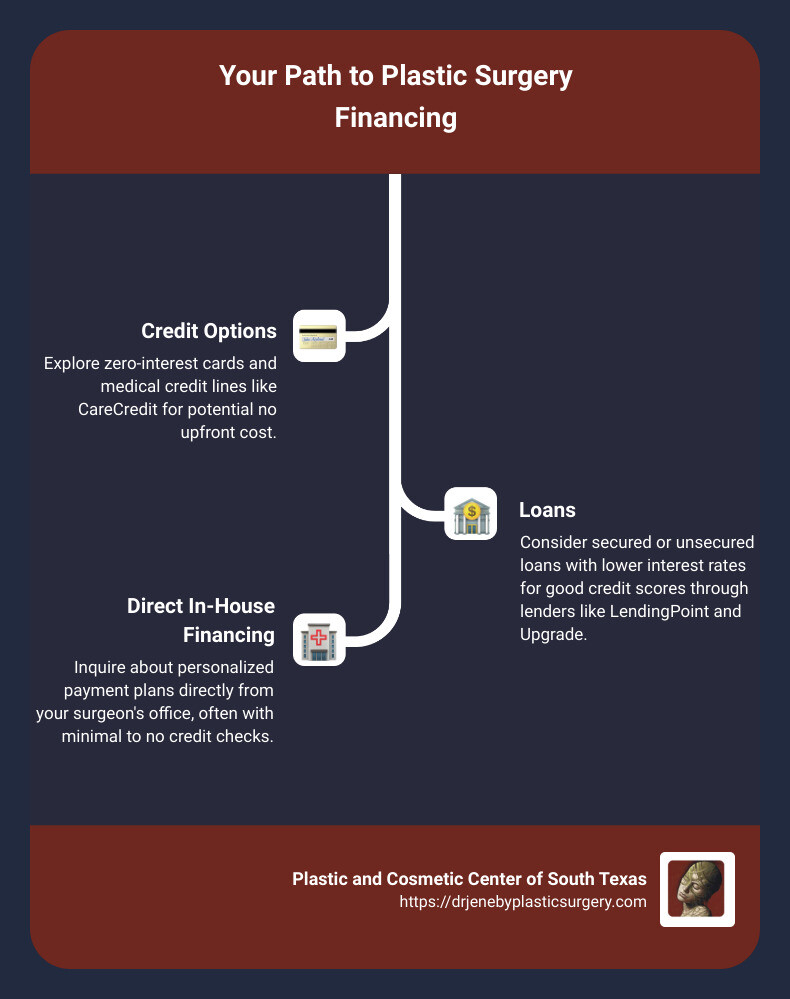
When considering how to finance your plastic surgery, you’re essentially looking at three main avenues: credit cards, loans, and in-house financing. Each of these options has its own set of benefits and considerations. Let’s break them down in simple terms.
Credit Cards
Credit cards, especially those designed for medical expenses like CareCredit, can be a convenient way to finance your procedure. They often offer promotional periods with zero interest, which means if you pay off the balance within that time frame, you’re essentially getting an interest-free loan. However, it’s crucial to pay attention to the terms. If you don’t pay off the balance before the promotional period ends, you could be hit with all the accumulated interest.
Loans
Personal loans from banks or online lenders are another route. These are typically unsecured loans, meaning you don’t need to put up any collateral like your home or car. The interest rates and terms can vary widely based on your credit score. For instance, lenders such as LendingPoint and Upgrade offer loans with varying APRs and terms, making it essential to shop around and find the best deal for your situation.
In-house Financing
Some clinics, like the Plastic and Cosmetic Center of South Texas, offer in-house financing options. This can be an excellent way to get a tailored financing solution that fits your budget. In-house financing plans can sometimes offer more flexible repayment terms and might not require as stringent a credit check as banks or credit card companies. However, it’s still important to fully understand the terms and conditions before committing.
Understanding how plastic surgery financing works is crucial to making an informed decision. Whether you choose a credit card with a promotional interest rate, a personal loan, or an in-house financing option, make sure you’re comfortable with the monthly payments and the total cost of the loan. Financing can make your aesthetic goals attainable, but choose the option that aligns with your financial situation and goals.
As we move into exploring the minimum credit score needed for financing, your credit health plays a significant role in determining your financing options and the terms you’ll receive. Let’s dive into that next.
Minimum Credit Score for Financing
When it comes to financing plastic surgery, your credit score is like a key that can unlock various financing doors. Not all doors require the same type of key, meaning not all financing options have the same credit score requirements. Let’s look at some popular financing options and what they typically ask for in terms of credit scores.
LendingPoint
LendingPoint targets individuals with fair credit scores. Generally, they consider applications from those with credit scores as low as 585. This makes LendingPoint a viable option if your credit isn’t in the ‘excellent’ range but you’re still looking to finance your procedure.
Upgrade
Upgrade is another lender that caters to people with fair to good credit scores. They typically require a minimum credit score of 620. Upgrade offers personal loans that can be used for various purposes, including plastic surgery, making it a flexible option for potential borrowers.
Universal Credit
With Universal Credit, individuals with a credit score of around 560 might still qualify for a loan. This is one of the lower credit score requirements on the market, positioning Universal Credit as an accessible option for those with less-than-ideal credit.
Discover
Discover Personal Loans generally cater to individuals with good to excellent credit scores, usually around 660 and above. If you have a strong credit history, Discover could offer competitive interest rates and terms for your plastic surgery financing needs.
CareCredit
CareCredit is a bit different from traditional loans as it’s a medical credit card specifically designed for health, wellness, and personal care expenses, including plastic surgery. CareCredit doesn’t explicitly state a minimum credit score requirement, but it’s known to approve applicants with a wide range of credit scores. Approval and the terms offered, such as promotional 0% interest periods, may vary based on your creditworthiness.
PatientFi
PatientFi aims to make elective procedures more accessible by looking beyond the traditional credit score. They consider other factors in your financial profile, which can be beneficial if your credit score isn’t high. This approach allows more people to qualify for financing, even if they don’t meet the strict credit score criteria of other lenders.
Choosing the Right Option for You
Understanding how does plastic surgery financing work in terms of credit requirements is crucial. If your credit score isn’t perfect, options like LendingPoint, Universal Credit, and PatientFi might be worth considering. For those with stronger credit, Discover and Upgrade could provide favorable terms. And for a flexible, healthcare-specific option, CareCredit offers features tailored to medical expenses.
Before deciding, check your credit score to see where you stand. Then, compare the interest rates, fees, and terms of different financing options. The goal is to find a financing solution that fits your budget and allows you to proceed with your plastic surgery plans responsibly.
As we continue to navigate the complexities of financing plastic surgery, keep these credit score requirements and options in mind. The right financing plan can make your desired procedure more attainable, allowing you to focus on the results rather than the cost.
Next, we’ll delve into the various financing options available for plastic surgery, highlighting the pros and cons of each to help you make an informed decision.
Financing Options for Plastic Surgery
Financing plastic surgery can seem like navigating a maze. But don’t worry, understanding your options can make the journey smoother. Let’s break down the main ways you can finance your procedure: through medical loans, credit cards, in-house financing, and online lenders and banks.
Medical Loans
LendingPoint, Upgrade, Universal Credit: These are popular options for those looking to finance their plastic surgery with a loan. They offer specific loans for medical purposes, including cosmetic surgery. The advantage here is that you can often find competitive interest rates, especially if you have a good credit score. However, it’s important to read the fine print for any additional fees or penalties for early repayment.
Credit Cards
CareCredit, Zero-interest cards: CareCredit is a well-known option in the medical financing world. It’s specifically designed for health, wellness, and personal care, offering short-term financing options at 0% interest if paid within a promotional period. Zero-interest cards can be a great option if you’re able to pay off the balance before the interest-free period ends. Just be aware that interest rates can jump significantly after the promotional period.
In-house Financing
PatientFi, Direct payment plans: Some clinics, like the Plastic and Cosmetic Center of South Texas, offer in-house financing options. PatientFi, for example, puts the patient’s best interest at the center, offering flexible monthly payment plans customized to fit your budget. Direct payment plans through your clinic might not require a credit check and can offer a straightforward way to manage the cost of your procedure.
Online Lenders and Banks
LightStream, SoFi, Avant: These online lenders offer personal loans that can be used for plastic surgery. They often provide quick funding times and competitive interest rates for borrowers with good to excellent credit. LightStream, for instance, is known for its low rates and no fees, making it an attractive option for financing your surgery. SoFi and Avant also offer personal loans with flexible terms, but it’s crucial to compare the rates and terms to find the best deal for you.

When considering how does plastic surgery financing work, compare all your options. Look at the interest rates, fees, and repayment terms. Some questions to ask yourself include: Can I afford the monthly payments? What’s the total cost of the loan with interest included? Is there a penalty for paying off the loan early?
By carefully considering each option, you can find a financing solution that fits your budget and allows you to proceed with your desired plastic surgery procedure with confidence. The goal is to make your dream a reality in the most financially responsible way possible.
Next, we’ll explore the pros and cons of financing plastic surgery to help you weigh the benefits against the potential downsides.
Pros and Cons of Financing Plastic Surgery
When considering how does plastic surgery financing work, weigh both the advantages and disadvantages. This will help you make an informed decision that aligns with your financial situation and cosmetic goals.
Pros
Immediate Procedure: One of the biggest advantages of financing is the ability to undergo your desired plastic surgery procedure right away. You don’t have to wait years to save up the full amount, which means you can enjoy the benefits sooner.
Flexible Plans: Financing options offer a variety of payment plans to fit different budgets. Whether it’s a low-interest option or a plan with longer repayment terms, you can find a solution that works for you.
Various Lenders: There’s a wide range of lenders available, from medical loans and credit cards like CareCredit to in-house financing options. This variety means you’re more likely to find a financing solution that meets your needs.
Cons
Interest Rates: One of the significant downsides of financing is the potential for high-interest rates. If you’re not careful, you could end up paying a lot more for your procedure than you initially planned.
Additional Fees: Beyond interest rates, some financing options come with extra costs, such as origination fees or penalties for late payments. These additional fees can add up, increasing the overall cost of your surgery.
Credit Impact: Financing plastic surgery can affect your credit score. For instance, applying for new credit can result in a hard inquiry, which might lower your score temporarily. Additionally, how you manage your loan or credit card—such as making late payments—can have long-term impacts on your credit health.
In summary, financing can be a valuable tool for making plastic surgery more accessible, allowing you to proceed with your procedure without delay. However, it’s crucial to consider the potential financial impacts, including interest rates, fees, and the effect on your credit score. By carefully evaluating the pros and cons, you can choose the financing option that best suits your needs and financial situation, ensuring a positive outcome for both your appearance and your wallet.
Next, we’ll dive into how to choose the right financing option, focusing on factors like your credit score, interest rates, loan terms, and any associated fees.
How to Choose the Right Financing Option
When it comes to financing your plastic surgery, the choices can feel overwhelming. But don’t worry, we’re here to simplify it. Let’s break down the key factors you need to consider: credit score, interest rates, loan terms, and fees. This will help you navigate how plastic surgery financing works and find the best option for you.
Credit Score
Your credit score is like a financial report card. It shows lenders how good you are at paying back money. The higher your score, the better loan terms you might get. Think of it like this: a high score could mean lower interest rates, which saves you money. If your score isn’t where you want it to be, consider options like PatientFi, which offers flexible payment plans tailored to fit your budget, without hammering your credit score.
Interest Rates
Interest rates are what lenders charge you for borrowing money. They can make a big difference in how much you end up paying back. Lower is better here. Sometimes, you can find special deals like zero-interest periods with credit cards like CareCredit. Just be sure to pay it back before the promotional period ends, or you might face higher rates.
Loan Terms
Loan terms are how long you have to pay back the loan. Shorter terms usually mean higher monthly payments, but you’ll pay less in interest over time. Longer terms lower your monthly payments but increase the total interest you’ll pay. Think about what fits best in your monthly budget without stretching it too thin.
Fees
Watch out for hidden fees. Some loans come with extra costs like origination fees, late fees, or prepayment penalties. These can add up. Be sure to read the fine print and ask questions. You want to know exactly what you’re agreeing to before you sign anything.
Choosing the right financing option for your plastic surgery isn’t just about getting the procedure done. It’s about making sure it fits into your life without causing financial stress down the line. Take your time, compare your options, and don’t be afraid to ask for help if you need it. The goal is to feel great about your choice, both inside and out.
Keep these factors in mind. They’ll be your guideposts in navigating plastic surgery financing. Next up, we’ll tackle some of the most frequently asked questions about financing plastic surgery, helping you to further demystify the process.
Frequently Asked Questions about Plastic Surgery Financing
Navigating plastic surgery financing can feel like stepping into unknown territory. Let’s simplify things by answering some common questions you might have.
What credit score do you need?
The credit score you need for plastic surgery financing can vary widely depending on the lender. For traditional loans and credit cards, lenders typically look for scores above 600. However, options like CareCredit and PatientFi might have more flexible credit requirements, focusing instead on your overall financial picture rather than just a number. A higher credit score can lead to better interest rates and terms.
Is financing a good idea?
Financing can be a good idea if you’re eager to proceed with your plastic surgery but don’t have the full amount saved up. It offers the chance to spread the cost over time, making it more manageable. However, it’s important to consider the interest rates and fees that come with financing. They can add up, making your surgery more expensive in the long run. Always weigh the total cost of financing against your desire for immediate surgery and your ability to save up over time.
How do people afford plastic surgery?
People afford plastic surgery through a variety of means. Here are a few common methods:
- Savings: Many people save up for their surgery, setting aside a little bit each month until they have enough for the procedure.
- Medical Loans: Companies like LendingPoint, Upgrade, and Universal Credit offer loans specifically for medical expenses, including plastic surgery.
- Credit Cards: Specialized medical credit cards, such as CareCredit, provide financing options for healthcare services. Some offer interest-free periods if you pay off the balance within a certain timeframe.
- In-house Financing: Some clinics, like the Plastic and Cosmetic Center of South Texas, may offer direct payment plans, allowing you to pay for your procedure over time directly to the clinic.
- Online Lenders and Banks: Traditional personal loans from online lenders or banks can also be used for plastic surgery. Companies like LightStream and SoFi are popular choices.
In summary, there’s no one-size-fits-all answer to financing plastic surgery. Your financial situation, credit score, and personal preferences will guide your choice. With a bit of research and careful planning, you can find a financing option that works for you, making your cosmetic goals a reality without breaking the bank.
As we’ve explored the financing options available, it’s clear that doing your homework and understanding the terms and conditions of any financing plan is key. Keep these FAQs in mind as you consider the next steps in your plastic surgery journey.
Conclusion
When it comes to making a decision about plastic surgery, understanding how does plastic surgery financing work is just the beginning. At the Plastic and Cosmetic Center of South Texas, we believe that the journey towards enhancing your appearance should be as comfortable and stress-free as possible. This includes the financial aspect of your treatment.
Patient satisfaction is at the core of everything we do. We understand that each patient comes to us with unique needs and concerns. That’s why we offer a variety of financing options to ensure that financial constraints do not stand in the way of achieving your desired look. Our team is dedicated to guiding you through the financing process, helping you find the plan that best suits your budget and lifestyle.
Moreover, our experienced surgeons are committed to excellence, combining advanced techniques with compassionate care to achieve outstanding results. They understand the importance of your decision to undergo plastic surgery and are here to support you every step of the way. From the initial consultation to post-surgery care, our surgeons work tirelessly to ensure your safety, comfort, and satisfaction.
At the Plastic and Cosmetic Center of South Texas, we’re not just about transforming appearances; we’re about enriching lives. Our goal is to help you feel confident and beautiful, both inside and out. Whether you’re considering a minor cosmetic enhancement or a more significant transformation, you can trust us to provide expert care and support throughout your journey.
Investing in plastic surgery is an investment in yourself. By choosing the right financing option, you can make your cosmetic goals a reality without compromising on quality or experience. If you have any questions or would like to learn more about our services and financing options, please don’t hesitate to contact us. Let us help you take the first step towards the new you.


